
Advanced Professional Certificate in Government Event Organisation
The Advanced Professional Certificate in Government Event Organisation is a 100% online advanced professional certificate programme (1,500 hours, 12 months) for anyone who wants to build a career in government event organisation. You learn through practical modules and real case studies, guided by tutors with industry experience, and finish with a capstone project.
New intake every two months · Interest-free payment plans · ESINEV certificate of completion (non-accredited training).
Overview
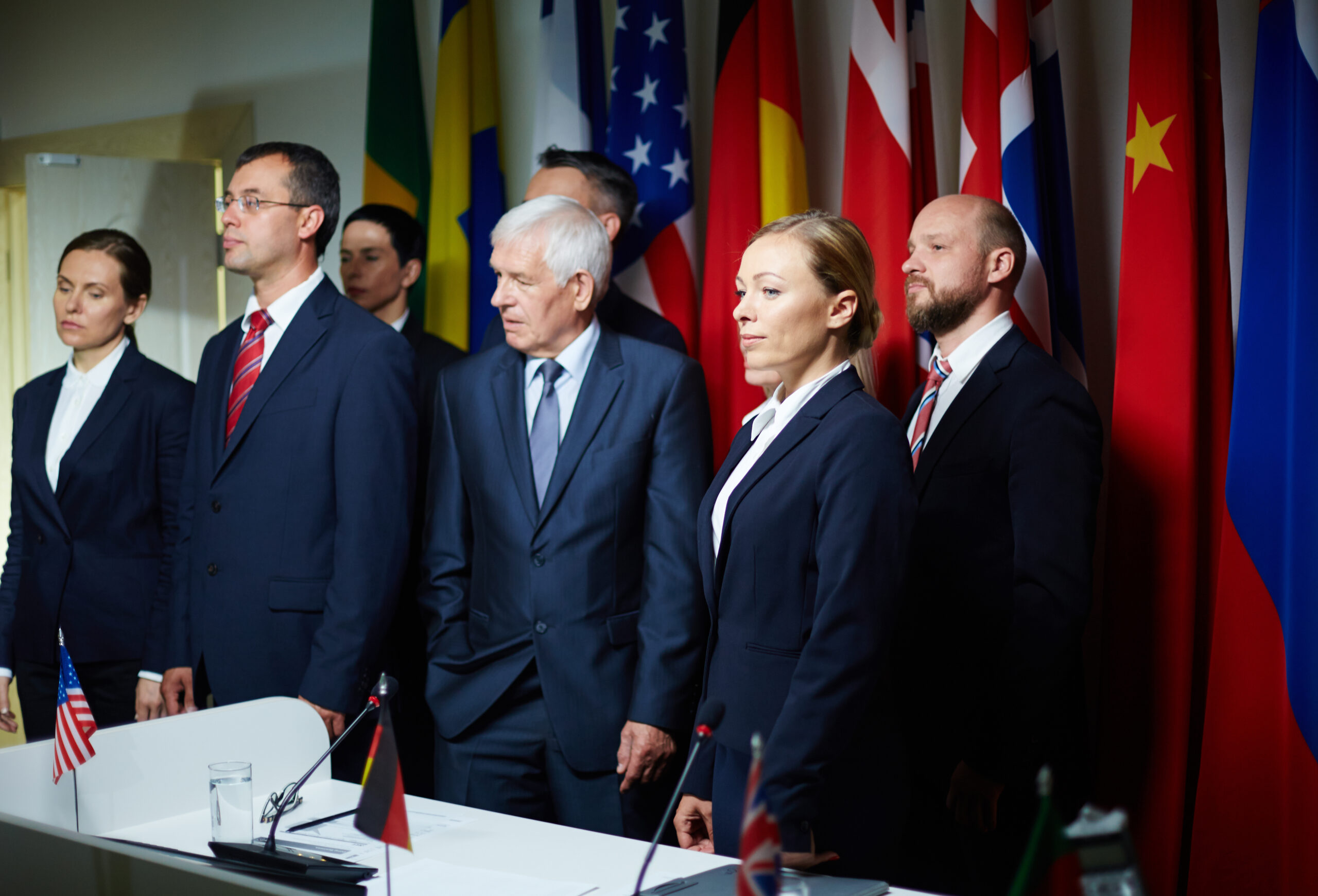
• Plan and execute government events: You will learn how to organise high-level events, from international summits to visits by heads of state.
• Diplomatic communication: You will develop diplomatic communication skills and learn to handle delicate situations and international protocols.
• Resource and budget management: You will acquire skills to effectively manage resources and the budget in the government context.
• Leadership in official environments: You will learn to lead and manage teams in the context of government protocol and high-level events.
• Knowledge of international law: You will understand the fundamentals of international law and its application in official acts and international relations.
Our Advanced Professional Certificate in Government Event Organisation is a cutting-edge advanced professional programme that focuses on providing students with the skills and knowledge necessary to excel in the world of official protocol and government event organisation .
This Advanced Professional Certificate in Government Event Organisation addresses the complexities and particularities of working in the government sphere, where diplomacy, etiquette and ceremonial are essential. Additionally, he focuses on the planning and execution of high-level government events.
Studying from Australia
This programme is delivered 100% online in English, so you can study from anywhere in Australia — Sydney, Melbourne, Brisbane, Perth, Adelaide or Auckland — and fit your learning around work. The skills covered apply directly to events across Australia, from conferences and exhibitions to weddings and festivals. Fees are shown in Australian dollars (AUD) and can be spread with interest-free instalments.
About your certificate
ESINEV programmes are non-degree professional training delivered 100% online. On completion you receive an ESINEV certificate of completion. ESINEV is a private online training provider: this programme is not an Australian degree or AQF qualification, and is not accredited by TEQSA or ASQA.
Your learning path
Curriculum
A 1,500-hour program organized in 10 modules covering official protocol and the organization of government and institutional events. It brings together regulations, state ceremonial, security, communication and public management.
Submodule 1.1. Origins and evolution of state ceremonial
Trace the history of ceremonial and its role in representing public authority.
Submodule 1.2. Protocol, ceremonial and etiquette
Distinguish the key concepts and how they apply in the institutional sphere.
Submodule 1.3. The structure of the state and its institutions
Identify the branches, levels of government and institutions involved in official events.
Submodule 1.4. Legal sources of official protocol
Analyze the laws, decrees and regulations governing precedence and honors.
Submodule 1.5. Official and non-official events
Classify events by organizer, nature and applicable regulations.
Submodule 1.6. The protocol service in public administration
Learn the organization, functions and profiles of public protocol offices.
Submodule 1.7. Principles of institutional representation
Apply the criteria of hierarchy, territoriality and hosting at public events.
Submodule 1.8. Custom and social practice in protocol
Assess the weight of tradition when written rules do not cover a case.
Submodule 1.9. Public ethics and transparency at events
Apply principles of austerity, transparency and accountability at official events.
Submodule 1.10. Trends in institutional protocol
Analyze the modernization, simplicity and openness to citizens of contemporary ceremonial.
Submodule 2.1. General order of precedence
Apply the official order of precedence for national and subnational authorities.
Submodule 2.2. Precedence at regional and local events
Order local, regional and national authorities according to the scope of the event.
Submodule 2.3. Ceding the chair and hosting
Manage when and how the host cedes the chair to a higher authority.
Submodule 2.4. Judicial and legislative authorities
Correctly seat judges, legislators and constitutional bodies.
Submodule 2.5. The diplomatic corps and international organizations
Integrate ambassadors and international representatives into the order of precedence.
Submodule 2.6. Armed forces and law enforcement
Learn the precedence of military and police commanders at civilian events.
Submodule 2.7. Religious authorities
Handle the presence of religious representatives while respecting the non-denominational nature of the event.
Submodule 2.8. Representation and delegation of authorities
Determine the position of someone attending on behalf of another authority.
Submodule 2.9. Case studies of complex precedence
Solve real scenarios involving multiple institutions and levels of government.
Submodule 2.10. Lists and seating plans
Prepare precedence lists and seating plans ready for the team.
Submodule 3.1. The national flag and regional flags
Arrange official flags indoors, on flagpoles and outdoors in line with regulations.
Submodule 3.2. The national anthem and its performance
Apply the rules for playing the anthem and conduct during its performance.
Submodule 3.3. Coats of arms and institutional emblems
Use coats of arms and emblems correctly in print and stage design.
Submodule 3.4. Military honors at civilian events
Coordinate inspections, guards of honor and salutes with military units.
Submodule 3.5. Decorations and investiture
Organize investiture ceremonies and learn the correct wearing of decorations.
Submodule 3.6. Official forms of address
Use correct honorifics in spoken and written communication.
Submodule 3.7. Official mourning and flags at half-mast
Manage events during periods of official mourning and tributes to victims.
Submodule 3.8. Books of honor and official signings
Prepare the signing of books of honor and formal documents.
Submodule 3.9. Institutional gifts
Select official gifts in line with regulations and the recipient's culture.
Submodule 3.10. Using symbols at hybrid events
Adapt the display of official symbols to virtual settings and broadcasts.
Submodule 4.1. Swearing-in and inauguration ceremonies
Design the ceremonial for swearing-in ceremonies with the oaths and order of speeches.
Submodule 4.2. Opening public infrastructure
Organize openings with dignitaries, commemorative plaques and tours.
Submodule 4.3. Commemorative events and national holidays
Plan parades, receptions and celebrations of official dates.
Submodule 4.4. State funerals and tributes
Structure official funeral ceremonies with honors and institutional presence.
Submodule 4.5. Official awards and honors
Organize institutional galas with award presentations and public recognition.
Submodule 4.6. Plenary and solemn sessions
Prepare solemn sessions of collegiate bodies and parliaments.
Submodule 4.7. Signing interagency agreements
Arrange the table, signatories and speeches at the signing of public agreements.
Submodule 4.8. Official visits to regions
Plan agendas, routes and receptions for visits by dignitaries.
Submodule 4.9. Events with public participation
Involve the public and civil society in open institutional events.
Submodule 4.10. Press conferences and official statements
Organize rooms, lecterns and the order of spokespeople at public appearances.
Submodule 5.1. The Vienna Convention on Diplomatic Relations
Learn the privileges, immunities and functions of diplomatic missions.
Submodule 5.2. State visits and official visits
Distinguish the levels of visit and plan their full protocol program.
Submodule 5.3. Summits and multilateral meetings
Organize high-level meetings with multiple delegations in alphabetical order.
Submodule 5.4. Airport arrivals and departures
Coordinate official arrivals, welcoming committees and honors at the aircraft.
Submodule 5.5. Letters of credence
Learn the ceremonial for ambassadors presenting their credentials.
Submodule 5.6. State banquets
Design menus, seating, toasts and service at official dinners.
Submodule 5.7. Interpreting and language management
Coordinate interpreters, booths and simultaneous interpreting at international meetings.
Submodule 5.8. Cultural and religious sensitivity
Adapt greetings, food and gifts to each delegation's culture.
Submodule 5.9. Flags and order of countries
Arrange flags and delegations by alphabetical order or hosting criteria.
Submodule 5.10. Coordination with embassies
Manage notes verbales, accreditation and liaison with foreign missions.
Submodule 6.1. Institutional brief and political objectives
Translate the institution's objectives into a coherent event concept.
Submodule 6.2. Timeline and critical path
Plan the timings, milestones and dependencies of a large-scale official event.
Submodule 6.3. Selecting and adapting official spaces
Evaluate public buildings, heritage sites and outdoor spaces for each event.
Submodule 6.4. Running order and protocol script
Write the running order with arrivals, speeches, anthems and departures.
Submodule 6.5. Invitations and managing official lists
Prepare lists, confirm attendance and manage substitutions of dignitaries.
Submodule 6.6. Receiving and seating guests
Organize hosts, desks and arrival circuits by type of guest.
Submodule 6.7. Technical and audiovisual production
Coordinate sound, lighting, lecterns and the institutional feed for the media.
Submodule 6.8. Rehearsals and drills
Hold rehearsals with dignitaries, security forces and the technical team.
Submodule 6.9. Interagency coordination
Align offices, security services and suppliers in a single plan.
Submodule 6.10. Handling protocol mishaps
Resolve absences, agenda changes and precedence conflicts live.
Submodule 7.1. Risk analysis for official events
Identify the threats, vulnerabilities and risk level of each event.
Submodule 7.2. Coordination with security services
Integrate close protection, police and civil protection into event planning.
Submodule 7.3. Perimeters and access control
Define security rings, accreditation and access checkpoints.
Submodule 7.4. Emergency and evacuation plan
Prepare emergency plans adapted to public buildings and capacities.
Submodule 7.5. Security for senior officials
Coordinate the movements, vehicles and reserved areas of protected persons.
Submodule 7.6. Crowd management
Plan crowd flows, barriers and communication at mass events.
Submodule 7.7. Cybersecurity at institutional events
Protect communications, digital accreditation and broadcasts against attacks.
Submodule 7.8. Health protocols and medical assistance
Arrange medical services and response plans for medical emergencies.
Submodule 7.9. Demonstrations and public disorder
Anticipate and manage protests or incidents during public events.
Submodule 7.10. Crisis management during the event
Activate crisis committees and communicate decisions quickly and consistently.
Submodule 8.1. Communication plan for the official event
Define institutional messages, spokespeople and the information calendar before and after the event.
Submodule 8.2. Accrediting and assisting journalists
Manage requests, press areas and media services.
Submodule 8.3. Institutional image and TV production
Take care of shots, backdrops and set design for broadcast coverage.
Submodule 8.4. Institutional social media
Plan real-time digital coverage in an institutional tone.
Submodule 8.5. Speeches and communication by dignitaries
Coordinate the drafting and timing of official speeches.
Submodule 8.6. Accessible and inclusive communication
Incorporate sign language, captioning and easy read into public events.
Submodule 8.7. Communication in crisis situations
Prepare messages and spokespeople for incidents or unexpected changes.
Submodule 8.8. Working with international agencies and media
Look after foreign correspondents and media at high-level events.
Submodule 8.9. Photo archive and institutional record
Organize official photography, video and the event's documentary archive.
Submodule 8.10. Monitoring media impact
Measure the coverage, reach and tone of published information.
Submodule 9.1. Public event budgets
Prepare and justify budgets for official events using efficiency criteria.
Submodule 9.2. Public procurement of services
Learn the tender procedures, specifications and contract awards for event services.
Submodule 9.3. Spending control and oversight
Prepare documentation for audits and public spending oversight bodies.
Submodule 9.4. Sponsorship and public-private partnerships
Manage private contributions in compliance with transparency regulations.
Submodule 9.5. Data protection at official events
Apply personal data rules to guests, accreditation and images.
Submodule 9.6. Universal accessibility in public buildings
Ensure physical, sensory and cognitive accessibility at institutional events.
Submodule 9.7. Sustainable public events
Apply green procurement, waste management and sustainable mobility criteria.
Submodule 9.8. Carbon footprint of official events
Calculate and offset the emissions associated with institutional events.
Submodule 9.9. Equality and gender perspective in protocol
Integrate equality criteria into head tables, speeches and communication.
Submodule 9.10. Evaluating results and the institutional report
Measure objectives, satisfaction and impact and write the close-out report.
Submodule 10.1. Running a protocol office
Organize the teams, processes and resources of a public protocol department.
Submodule 10.2. Institutional protocol manual
Write your institution's own manual with rules, templates and procedures.
Submodule 10.3. Leadership and working under pressure
Develop decision-making and leadership skills in high-pressure environments.
Submodule 10.4. Negotiating with offices and delegations
Apply negotiation techniques to resolve precedence and agenda conflicts.
Submodule 10.5. Digitalizing protocol management
Use databases of dignitaries, CRMs and accreditation software.
Submodule 10.6. Annual calendar of institutional events
Plan the calendar of official events in line with the political agenda.
Submodule 10.7. Comparative study of protocol
Analyze the protocol models of different countries and international institutions.
Submodule 10.8. Innovation in public ceremonial
Propose more approachable, sustainable and participatory formats for official events.
Submodule 10.9. Knowledge management and lessons learned
Document experiences to improve the organization of future events.
Submodule 10.10. Preparing and defending the final project
Structure the project report and prepare its presentation before an examination panel.
Plan and lead an official event (summit, state visit or inauguration) end to end, including a precedence plan, security, public budget, risk management, KPIs and a defense before an examination panel.
How you learn
Virtual campus available 24/7 on any device.
Personal follow-up and feedback on your work.
Flexible schedule that fits around your job.
Apply what you learn to a real events case.
Nearby You will get the support of our highly trained teachers, who will expedite your academic development, as well as the guidance of a backup mentor to assist you in achieving your goals.
Practical Our academic virtual space will be your main educational platform, where you will find all the programs you will take. In addition, you will have access to the electronic library, an online society to interact with other trainees and support accessible at all times.
Career paths
• International organisations: They can also work in international organisations, such as the United Nations or the European Union, managing official events and events.
• Embassy and diplomatic representations: Embassies and consulates require professionals with experience in protocol and event organisation to represent their countries abroad.
• Consulting on protocol and government events: Some graduates choose to undertake and provide consulting services on official protocol and government events.
• Media and diplomatic communication: Others may work in media specialised in diplomacy and government events.
Admissions
- Request information
Leave your details and an adviser will contact you.
- Guidance call
We review your profile and career goals.
- Enrolment and access
Secure your place and get access to the campus.
Fees & payment
Indicative instalment. Please confirm payment terms with the admissions team.
At Esinev Education in collaboration with ISEIE Innovation School, we are dedicated to ensuring your future by offering you a wide range of scholarships and financial aid so that you can receive the best education without obstacles. Our scholarships and grants are available to everyone, regardless of your profile, as we have various options to adapt to your personal circumstances. Explore all the information about our scholarships and aid, and choose the one that best suits your needs to ensure your academic training.
Academic excellence The scholarship for Students with an outstanding academic record is awarded to those students who have demonstrated outstanding performance in their studies. This scholarship recognises and rewards the effort, dedication and academic achievements of outstanding students.
Scholarship for people over 45 The scholarship for People over 45 is a unique opportunity designed specifically for people who want to resume their higher studies after having passed a certain stage of their life. This scholarship is aimed at those individuals who, despite not having had the opportunity to obtain a university education at the time, wish to acquire new knowledge and skills to advance their career or explore new professional horizons.
Scholarship for those under 25 The scholarship for young people under 25 is designed to support this specific age group in their pursuit of higher education. This scholarship provides opportunities and financial resources to help young people overcome economic barriers and access quality education. We value the potential and commitment of young people in their academic and professional development, which is why this scholarship is awarded to those who demonstrate outstanding academic performance, as well as strong motivation and dedication to achieve their educational goals. We are committed to supporting talented young people and providing them with the necessary tools so they can make the most of their potential and achieve a successful future.
Woman Leader Scholarship The “Women and Leadership” scholarship is designed to support and empower women who demonstrate strong leadership potential in their fields of study. This scholarship offers the opportunity to receive a quality education and develop leadership skills to help women excel in their careers and challenge gender stereotypes.
Entrepreneurship Scholarships The scholarship is aimed at those people who are working on projects or ventures that seek to generate a positive impact on the world. It is designed to support those individuals committed to making the world a better place through their initiatives.
Large Family The scholarship is specially designed for those students who belong to a large family, recognising and supporting the special circumstances they face in terms of financial resources and family responsibilities.
Self-Employed Scholarship The “Self-Employed Scholarship” is financial aid designed to support entrepreneurs and self-employed workers in their professional development and business growth. This scholarship offers financial support to cover expenses related to the training, advice and resources necessary to strengthen your business skills and competencies.
Job integration scholarship (for unemployed) The job integration scholarship is specifically designed to help unemployed people reintegrate into the labour market. This scholarship provides additional financial support and resources to ease the transition to new employment.
Frequently asked questions
Is this an official degree?
On completion you receive an ESINEV certificate. It is not an official degree; recognition can be assessed depending on the programme you complete and local regulations.
How long is it and how many hours?
Duration: 12 months. Study load: 1,500 hours, designed to fit around your work.
Is it taught online?
Yes. It is 100% online, with a virtual campus, downloadable materials and tutoring from industry professionals.
Can I pay in instalments?
Yes. Payment: 11 months. The admissions team will confirm the terms.
When can I start?
Classes start exactly one month after you enrol: if you enrol today, you start on 20 December 2026. Enrolment is open all year and closes every Friday.
Shall we talk about your future in events?
Leave your details and an adviser will walk you through the programme, dates and payment options.
WhatsApp