
Professional Certificate in Drone Light Shows and Aerial Choreography
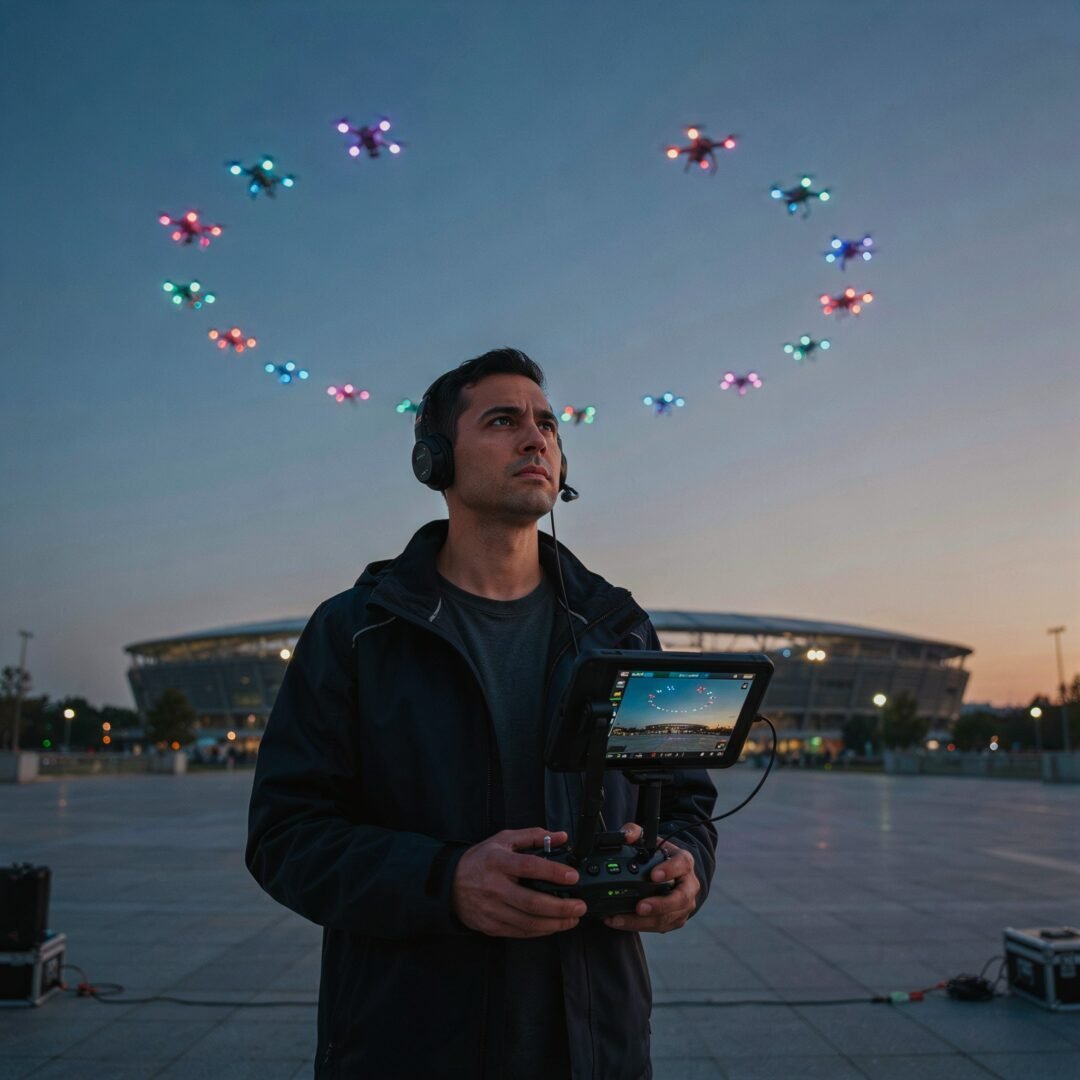
The Professional Certificate in Drone Light Shows and Aerial Choreography is a 100% online professional certificate (450 hours, 36 weeks) for anyone who wants to build a career in drone light shows and aerial choreography. You learn through practical modules and real case studies, guided by tutors with industry experience, and finish with a final project.
New intake every two months · Interest-free payment plans · ESINEV certificate of completion (non-accredited training).
Overview
The Professional Certificate in Drone Light Shows and Aerial Choreography prepares you to work with confidence on projects related to Drone Light Shows and Aerial Choreography. You will learn to:
- Analyse needs, risks and opportunities.
- Design realistic solutions, plans and procedures.
- Coordinate teams, vendors and resources.
- Define KPIs to measure and improve results.
Studying from Australia
This programme is delivered 100% online in English, so you can study from anywhere in Australia — Sydney, Melbourne, Brisbane, Perth, Adelaide or Auckland — and fit your learning around work. The skills covered apply directly to events across Australia, from conferences and exhibitions to weddings and festivals. Fees are shown in Australian dollars (AUD) and can be spread with interest-free instalments.
About your certificate
ESINEV programmes are non-degree professional training delivered 100% online. On completion you receive an ESINEV certificate of completion. ESINEV is a private online training provider: this programme is not an Australian degree or AQF qualification, and is not accredited by TEQSA or ASQA.
Your learning path
Curriculum
A 450-hour program in 8 modules to conceive, plan and produce drone shows with aerial choreography at events, safely and in compliance with regulations.
Submodule 1.1. The evolution of drone shows
Learn how fireworks gave way to shows performed by drone swarms.
Submodule 1.2. Types of aerial show
Distinguish between night-time light shows, drone pyrotechnics, indoor and hybrid shows.
Submodule 1.3. Anatomy of a show drone
Understand the frame, LEDs, batteries, GNSS and communications of show drones.
Submodule 1.4. Swarm systems and centralized control
Analyze how a ground station coordinates hundreds of synchronized drones.
Submodule 1.5. Applications at events
Review uses at brand launches, festivals, ceremonies and celebrations.
Submodule 1.6. Advantages and limitations compared with fireworks
Compare environmental impact, noise, cost and weather constraints.
Submodule 1.7. International reference cases
Study standout shows and the keys to their design.
Submodule 2.1. The show's creative concept
Translate the client's message into a visual story for the sky.
Submodule 2.2. Storyboarding figures and scenes
Sketch formation sequences and the show's key transitions.
Submodule 2.3. Composition and legibility in the sky
Adjust size, density and perspective so figures read clearly.
Submodule 2.4. Color and light design
Define consistent palettes, glow effects and light animations.
Submodule 2.5. Synchronization with music and sound
Align the aerial choreography with the soundtrack and moments of impact.
Submodule 2.6. Integrating logos and QR codes
Represent brands and interactive elements effectively in the air.
Submodule 2.7. Integration with other stage media
Combine drones with projection mapping, lasers, pyrotechnics or the main stage.
Submodule 3.1. Drone show design software
Learn about animation tools specifically designed for drone swarms.
Submodule 3.2. Modeling 3D formations
Create three-dimensional figures from designs and illustrations.
Submodule 3.3. Animating flight paths
Generate smooth transitions within maximum speeds and accelerations.
Submodule 3.4. Safety constraints in animation
Apply minimum distances between drones and height and speed limits.
Submodule 3.5. Simulation and previsualization
Validate the show in a simulator from different audience viewpoints.
Submodule 3.6. Optimizing the number of drones
Match the number of drones to the budget and the complexity of the figures.
Submodule 3.7. Exporting and validating flight files
Convert the animation into verified flight missions for the fleet.
Submodule 4.1. The regulatory framework for drones
Learn the operating categories and general requirements of aviation authorities.
Submodule 4.2. Operations in the specific category
Understand authorizations, risk assessments and the scenarios that apply to shows.
Submodule 4.3. Airspace and coordination
Identify restricted zones and coordinate with air traffic control.
Submodule 4.4. Local authority and public safety permits
Obtain local authorizations for overflight and use of the space.
Submodule 4.5. Licensed pilots and operators
Review training and registration requirements for operating staff.
Submodule 4.6. Mandatory insurance
Take out liability cover appropriate to the operation.
Submodule 4.7. Privacy and image capture
Comply with data regulations if images are recorded during the flight.
Submodule 5.1. Choosing the launch area
Select takeoff and landing areas of suitable size and safety.
Submodule 5.2. Safety and audience areas
Define exclusion zones, buffers and the best location for spectators.
Submodule 5.3. Weather analysis
Assess wind, rain, temperature and visibility to make the go/no-go decision.
Submodule 5.4. Radio and GNSS interference
Analyze the spectrum and interference risks around the event.
Submodule 5.5. Operational risk assessment
Apply risk analysis methodologies to swarm operations.
Submodule 5.6. Emergency and contingency plans
Prepare procedures for signal loss, drone failures or intrusions.
Submodule 5.7. Coordination with event security
Integrate the show into the event emergency plan and coordination with emergency services.
Submodule 6.1. Transport and setup logistics
Organize transport, grid layout and fleet preparation.
Submodule 6.2. Battery management and charging
Plan charging cycles, safe storage and spare batteries.
Submodule 6.3. Calibration and pre-show tests
Carry out calibrations, system checks and test flights.
Submodule 6.4. Flight crew roles
Assign the roles of chief pilot, technicians, observers and coordination.
Submodule 6.5. Countdown and show execution
Coordinate the takeoff, show and landing sequence with the rest of the event.
Submodule 6.6. Responding to in-flight incidents
Apply return-to-home, emergency landing and recovery procedures.
Submodule 6.7. Teardown and post-flight analysis
Review flight logs, incidents and fleet condition.
Submodule 7.1. The drone show business model
Analyze the cost structure, margins and suppliers in the market.
Submodule 7.2. Budgeting a show
Calculate design, fleet, crew, permit, insurance and logistics costs.
Submodule 7.3. Sales proposal to the client
Present the show with visual concepts, scope and terms.
Submodule 7.4. Contracts and weather cancellations
Include clauses on weather, alternative dates and responsibilities.
Submodule 7.5. Sustainability and wildlife
Assess the impact on wildlife, waste and energy compared with pyrotechnic alternatives.
Submodule 7.6. Filming and social media amplification
Plan audiovisual capture of the show for later distribution.
Submodule 7.7. Measuring the show's impact
Define KPIs for reach, mentions, recall and client satisfaction.
Submodule 8.1. Brief and show concept
Define the event, the client and the creative idea for the show.
Submodule 8.2. Storyboard and music script
Develop scenes, figures and synchronization with the soundtrack.
Submodule 8.3. Animated previsualization
Present a simulation of the show's main formations.
Submodule 8.4. Site and permits plan
Design the operating and safety zones and the authorization plan.
Submodule 8.5. Risk assessment and contingencies
Prepare the risk analysis and emergency procedures.
Submodule 8.6. Budget and sales proposal
Calculate the full budget and prepare the offer to the client.
Submodule 8.7. Project presentation and defense
Defend the show before an evaluation panel with all its deliverables.
Design a drone show for an event with a storyboard, simulation, site plan, permits, risk analysis and budget.
Career paths
This program strengthens your profile for roles related to Drone Light Shows and Aerial Choreography: project coordination, operations, consulting and specialised event services at agencies, venues, hotels and corporate event teams.
Admissions
- Request information
Leave your details and an adviser will contact you.
- Guidance call
We review your profile and career goals.
- Enrolment and access
Secure your place and get access to the campus.
Fees & payment
Indicative instalment. Please confirm payment terms with the admissions team.
Frequently asked questions
Is this an official degree?
On completion you receive an ESINEV certificate. It is not an official degree; recognition can be assessed depending on the programme you complete and local regulations.
How long is it and how many hours?
Duration: 36 weeks. Study load: 450 hours, designed to fit around your work.
Is it taught online?
Yes. It is 100% online, with a virtual campus, downloadable materials and tutoring from industry professionals.
Can I pay in instalments?
Yes. Payment: Up to 10 monthly payments. The admissions team will confirm the terms.
When can I start?
Classes start exactly one month after you enrol: if you enrol today, you start on 21 December 2026. Enrolment is open all year and closes every Friday.
Shall we talk about your future in events?
Leave your details and an adviser will walk you through the programme, dates and payment options.
WhatsAppRelated programmes
 Professional Certificate in Entertainment and Events on Cruises and Resorts$3,499
 Professional Certificate in Children's Entertainment for Events$2,859
 Professional Certificate in Creating Sensory Experiences for Events$3,719
 Professional Certificate in Label and Packaging Design for Product Launch Events$3,619