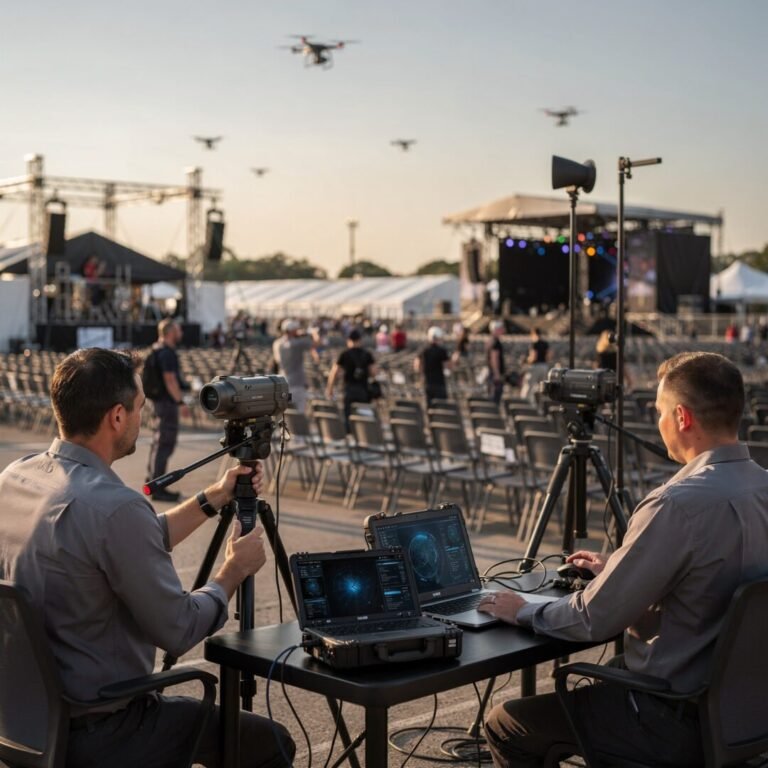
Professional Certificate in Security at Concerts and Festivals
The Professional Certificate in Security at Concerts and Festivals is a 100% online professional certificate (450 hours, 36 weeks) for anyone who wants to build a career in security at concerts and festivals. You learn through practical modules and real case studies, guided by tutors with industry experience, and finish with a final project.
New intake every two months · Interest-free payment plans · ESINEV certificate of completion (non-accredited training).

Overview
Our Professional Certificate in Concert and Festival Security is a specialised educational programme that will provide you with the essential skills to plan and coordinate effective security strategies at musical events and festivals. This professional certificate focuses on providing you with a deep understanding of safety principles specific to concerts and festivals, risk management and the application of protocols to ensure the safety of attendees and artists in these entertainment environments.
Studying from Australia
This programme is delivered 100% online in English, so you can study from anywhere in Australia — Sydney, Melbourne, Brisbane, Perth, Adelaide or Auckland — and fit your learning around work. The skills covered apply directly to events across Australia, from conferences and exhibitions to weddings and festivals. Fees are shown in Australian dollars (AUD) and can be spread with interest-free instalments.
About your certificate
ESINEV programmes are non-degree professional training delivered 100% online. On completion you receive an ESINEV certificate of completion. ESINEV is a private online training provider: this programme is not an Australian degree or AQF qualification, and is not accredited by TEQSA or ASQA.
Your learning path
Curriculum
A 450-hour program dedicated to safety and security at concerts and music festivals, both indoors and outdoors. Its 8 modules cover specific risks, stage operations, audience wellbeing and emergencies.
Submodule 1.1. Types of concerts and festivals
Distinguish club gigs, stadium concerts, urban festivals and camping festivals.
Submodule 1.2. Typical risks of live music
Identify front-of-stage crowding, substance use and heat.
Submodule 1.3. Stakeholders in live music
Get to know the promoter, producer, management, venue and technical crews.
Submodule 1.4. Technical and safety rider
Interpret the safety requirements included in artist riders.
Submodule 1.5. Lessons from festival incidents
Analyze concert incidents and the improvements they led to.
Submodule 1.6. Licensing for music events
Understand the permits and administrative requirements for concerts.
Submodule 1.7. Festival head of safety
Define the duties of the head of safety and their team.
Submodule 2.1. Planning the festival layout
Lay out stages, bars, restrooms and rest areas with safety in mind.
Submodule 2.2. Pit and front-of-stage barriers
Design the stage pit and the front crowd-control barrier.
Submodule 2.3. Front-of-stage density
Calculate arena floor capacities and maximum pressure zones.
Submodule 2.4. Flows between stages
Plan timetables and routes to avoid mass crossflows.
Submodule 2.5. Camping areas
Organize campsites with security, lighting and overnight patrols.
Submodule 2.6. Accessible viewing platforms
Position accessible platforms with good sightlines and safe evacuation.
Submodule 2.7. Emergency exits and service roads
Keep service roads and exits clear at all times.
Submodule 3.1. Safety of stage structures
Inspect stages, delay towers and temporary structures.
Submodule 3.2. Rigging and suspended loads
Supervise flown sound, lighting and screens.
Submodule 3.3. Managing wind on stages
Apply wind thresholds and procedures for lowering elements.
Submodule 3.4. Pyrotechnics and special effects
Control the safe use of pyrotechnics, CO2, flames and lasers.
Submodule 3.5. Electrical safety and generators
Prevent electrical hazards in temporary installations.
Submodule 3.6. Backstage and restricted areas
Control access to dressing rooms, the stage and technical areas.
Submodule 3.7. Artist protection
Plan close protection, transfers and talent security.
Submodule 4.1. Live music audience behavior
Understand mosh pits, crowd surfing and surges toward the stage.
Submodule 4.2. Pit team
Organize the team that extracts and assists members of the audience.
Submodule 4.3. Detecting crowd pressure
Spot early warning signs of compression and dangerous overcrowding.
Submodule 4.4. Show stop for safety reasons
Set up the protocol for halting the performance in a coordinated way.
Submodule 4.5. Messages to the audience from the stage
Prepare safety messages for artists and screens.
Submodule 4.6. Preventing touting and fake tickets
Prevent entry with fraudulent tickets and overcapacity.
Submodule 4.7. Mass egress at the end of the concert
Plan a staggered routine egress and public transport.
Submodule 5.1. Festival medical cover
Size medical posts, ambulances and medical staff.
Submodule 5.2. Heatstroke and hydration
Prevent heat-related risks with free water and shaded areas.
Submodule 5.3. Harm reduction
Integrate harm reduction programs for alcohol and drugs.
Submodule 5.4. Hearing protection
Monitor sound levels and provide earplugs.
Submodule 5.5. Preventing sexual violence
Set up safe spaces and protocols for support and reporting.
Submodule 5.6. Caring for vulnerable people
Protect minors, lost persons and attendees in crisis.
Submodule 5.7. Mental wellbeing and calm spaces
Provide rest areas and emotional support.
Submodule 6.1. Festival emergency plan
Prepare the emergency plan specific to the music venue.
Submodule 6.2. Storms and weather events
Activate protocols for lightning storms, heavy rain or high winds.
Submodule 6.3. Evacuating open-air sites
Plan evacuations of large open grounds and camping areas.
Submodule 6.4. Fires at campsites and on stages
Prevent and respond to fires in structures and campsites.
Submodule 6.5. Threats and violent acts
Apply protocols for threats, fights and attacks.
Submodule 6.6. Festival control room
Coordinate security, production, medical teams and public services.
Submodule 6.7. Crisis communication with attendees
Inform attendees via app, social media, screens and PA.
Submodule 7.1. Access control and searches
Organize searches, detectors and queues at entrances.
Submodule 7.2. Wristbands and accreditation
Manage RFID wristbands, accreditation and access zones.
Submodule 7.3. Private security regulations
Apply the powers and limits of security personnel.
Submodule 7.4. Noise and community relations
Comply with noise limits and handle complaints from neighbors.
Submodule 7.5. Event insurance
Take out public liability and cancellation cover.
Submodule 7.6. Debriefing and lessons learned
Analyze incidents and propose improvements for future editions.
Submodule 7.7. Festival safety indicators
Measure incidents, medical cases and response times.
Submodule 8.1. Choosing the concert or festival
Define the event, its capacity, lineup and venue.
Submodule 8.2. Live music risk assessment
Analyze risks specific to the audience and the production.
Submodule 8.3. Layout and capacities
Design the site with a pit, flows and emergency exits.
Submodule 8.4. Health and wellbeing plan
Define medical cover, harm reduction and safe spaces.
Submodule 8.5. Emergency and show stop plan
Develop emergency protocols and show stop procedures.
Submodule 8.6. Resources and budget
Size staffing, technology and safety costs.
Submodule 8.7. Presentation and defense
Defend the safety plan before an assessment panel.
Prepare the safety and wellbeing plan for a concert or festival, including site design, audience management, medical cover and emergency protocols.
How you learn
Virtual campus available 24/7 on any device.
Personal follow-up and feedback on your work.
Flexible schedule that fits around your job.
Apply what you learn to a real events case.
Nearby You will get the support of our highly trained teachers, who will expedite your academic development, as well as the guidance of a backup mentor to assist you in achieving your goals.
Practical Our academic virtual space will be your main educational platform, where you will find all the programs you will take. In addition, you will have access to the electronic library, an online society to interact with other trainees and support accessible at all times.
Career paths
• Entertainment event planning companies
• Concert and festival promoters
• Government entities security in entertainment
• Security consulting for entertainment events
Admissions
- Request information
Leave your details and an adviser will contact you.
- Guidance call
We review your profile and career goals.
- Enrolment and access
Secure your place and get access to the campus.
Subsequently, an advisory meeting will be scheduled focused on answering your questions. questions and clarify any uncertainties you may have.
Finally, a second call will be held in which all your concerns will be resolved and you will receive personalized guidance regarding everything you require.
Documentation If the program fits you, proceed to apply for your candidacy by sending the specific documentation to your personal advisor. If the project is to your liking, continue with the application for your candidacy , sending us the following documentation.
• Admission form
• Photocopy of your ID
• Curriculum vitae
• Previous studies
• Letter recommendation (optional)
Requirements to study Formalization of the place reservation through our different payment methods
• Direct debit.
• Credit card.
• Virtual payment.
Fees & payment
Indicative instalment. Please confirm payment terms with the admissions team.
At Esinev Education in collaboration with ISEIE Innovation School, we are dedicated to ensuring your future by offering you a wide range of scholarships and financial aid so that you can receive the best education without obstacles. Our scholarships and grants are available to everyone, regardless of your profile, as we have various options to adapt to your personal circumstances. Explore all the information about our scholarships and aid, and choose the one that best suits your needs to ensure your academic training.
Academic excellence The scholarship for Students with an outstanding academic record is awarded to those students who have demonstrated outstanding performance in their studies. This scholarship recognises and rewards the effort, dedication and academic achievements of outstanding students.
Scholarship for people over 45 The scholarship for People over 45 is a unique opportunity designed specifically for people who want to resume their higher studies after having passed a certain stage of their life. This scholarship is aimed at those individuals who, despite not having had the opportunity to obtain a university education at the time, wish to acquire new knowledge and skills to advance their career or explore new professional horizons.
Scholarship for those under 25 The scholarship for young people under 25 is designed to support this specific age group in their pursuit of higher education. This scholarship provides opportunities and financial resources to help young people overcome economic barriers and access quality education. We value the potential and commitment of young people in their academic and professional development, which is why this scholarship is awarded to those who demonstrate outstanding academic performance, as well as strong motivation and dedication to achieve their educational goals. We are committed to supporting talented young people and providing them with the necessary tools so they can make the most of their potential and achieve a successful future.
Woman Leader Scholarship The “Women and Leadership” scholarship is designed to support and empower women who demonstrate strong leadership potential in their fields of study. This scholarship offers the opportunity to receive a quality education and develop leadership skills to help women excel in their careers and challenge gender stereotypes.
Entrepreneurship Scholarships The scholarship is aimed at those people who are working on projects or ventures that seek to generate a positive impact on the world. It is designed to support those individuals committed to making the world a better place through their initiatives.
Large Family The scholarship is specially designed for those students who belong to a large family, recognising and supporting the special circumstances they face in terms of financial resources and family responsibilities.
Self-Employed Scholarship The “Self-Employed Scholarship” is financial aid designed to support entrepreneurs and self-employed workers in their professional development and business growth. This scholarship offers financial support to cover expenses related to the training, advice and resources necessary to strengthen your business skills and competencies.
Job integration scholarship (for unemployed) The job integration scholarship is specifically designed to help unemployed people reintegrate into the labour market. This scholarship provides additional financial support and resources to ease the transition to new employment.
Frequently asked questions
Is this an official degree?
On completion you receive an ESINEV certificate. It is not an official degree; recognition can be assessed depending on the programme you complete and local regulations.
How long is it and how many hours?
Duration: 36 weeks. Study load: 450 hours, designed to fit around your work.
Is it taught online?
Yes. It is 100% online, with a virtual campus, downloadable materials and tutoring from industry professionals.
Can I pay in instalments?
Yes. Payment: 5 months. The admissions team will confirm the terms.
When can I start?
New intakes open every two months. Request information to secure a place in the next one.
Shall we talk about your future in events?
Leave your details and an adviser will walk you through the programme, dates and payment options.
WhatsApp