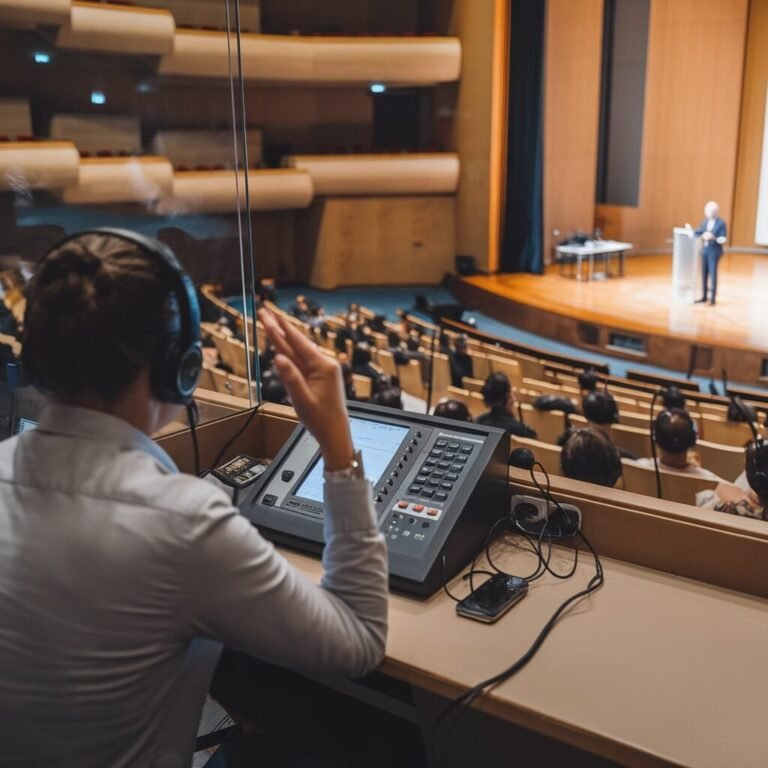
Course in AI-Assisted Dubbing and Voice-Over for Multilingual Events
The Course in AI-Assisted Dubbing and Voice-Over for Multilingual Events is a 100% online short course (150 hours, 8 weeks) for anyone who wants to build practical skills in ai-assisted dubbing and voice-over for multilingual events. You learn through practical modules and real case studies, guided by tutors with industry experience.
New intake every two months · Interest-free payment plans · ESINEV certificate of completion (non-accredited training).
Overview
The Course in AI-Assisted Dubbing and Voice-Over for Multilingual Events prepares you to work with confidence on projects related to AI-Assisted Dubbing and Voice-Over for Multilingual Events. You will learn to:
- Analyse needs, risks and opportunities.
- Design realistic solutions, plans and procedures.
- Coordinate teams, vendors and resources.
- Define KPIs to measure and improve results.
Studying from Australia
This programme is delivered 100% online in English, so you can study from anywhere in Australia — Sydney, Melbourne, Brisbane, Perth, Adelaide or Auckland — and fit your learning around work. The skills covered apply directly to events across Australia, from conferences and exhibitions to weddings and festivals. Fees are shown in Australian dollars (AUD) and can be spread with interest-free instalments.
About your certificate
ESINEV programmes are non-degree professional training delivered 100% online. On completion you receive an ESINEV certificate of completion. ESINEV is a private online training provider: this programme is not an Australian degree or AQF qualification, and is not accredited by TEQSA or ASQA.
Your learning path
Curriculum
A 150-hour program in 5 modules to manage technology-assisted dubbing, voice-over and interpreting at events with multilingual audiences.
Submodule 1.1. Linguistic analysis of the audience
Identify attendees' languages, profiles and comprehension needs.
Submodule 1.2. Translation modes at events
Distinguish between simultaneous and consecutive interpreting, dubbing, voice-over and subtitling.
Submodule 1.3. Choosing the mode by format
Choose the right language solution for plenaries, workshops, galas or videos.
Submodule 1.4. Language quality and confidentiality
Define quality standards and confidentiality agreements with professionals.
Submodule 1.5. Budgeting language services
Estimate the costs of interpreters, voice artists, technology and post-production.
Submodule 2.1. Speech synthesis and neural voices
Evaluate TTS engines by naturalness, available languages and usage licenses.
Submodule 2.2. Voice cloning and automatic dubbing
Learn about AI dubbing workflows and their ethical and legal limits.
Submodule 2.3. Live machine speech translation
Test speech-to-speech systems and measure latency and accuracy.
Submodule 2.4. Remote simultaneous interpreting (RSI) platforms
Configure RSI platforms with channels for each language.
Submodule 2.5. Distributing audio to attendees
Deliver language channels via receivers, apps or streaming.
Submodule 3.1. Adapting scripts for voice-over
Adjust texts to the spoken rhythm, length and register of each language.
Submodule 3.2. Directing professional voice artists
Guide recording sessions to achieve the right tone, diction and consistency.
Submodule 3.3. Synchronization and lip sync
Apply sync techniques for corporate videos and opening pieces.
Submodule 3.4. Remote recording and home studios
Ensure audio quality in remote recordings with voice artists.
Submodule 3.5. Mixing and mastering versions
Deliver final versions for each language with the correct levels and formats.
Submodule 4.1. Booths, consoles and ISO standards
Plan interpreting booths and infrastructure in line with applicable ISO standards.
Submodule 4.2. Coordinating interpreters and technicians
Organize shifts, briefings and advance documentation for the language team.
Submodule 4.3. Live technical contingencies
Resolve channel drops, latency and connection failures during the event.
Submodule 4.4. Voice and image rights
Manage consent, voice rights assignments and the use of synthetic voices.
Submodule 4.5. Transparency with the audience about AI
Inform the audience when a voice or translation has been artificially generated.
Submodule 5.1. The event's language services plan
Integrate all modes into a coherent plan for each session.
Submodule 5.2. Workflow and delivery schedule
Coordinate scripts, recordings, reviews and tests before the event.
Submodule 5.3. Quality control with native speakers
Review versions with native speakers to detect errors and cultural nuances.
Submodule 5.4. Comprehension and satisfaction metrics
Measure channel usage, comprehension and ratings by language.
Submodule 5.5. International event case study
Plan the full language coverage of an event in five languages.
Plan the multilingual coverage of an international event combining interpreting, voice-over and assisted dubbing, with a budget and technical protocol.
Career paths
This program strengthens your profile for roles related to AI-Assisted Dubbing and Voice-Over for Multilingual Events: project coordination, operations, consulting and specialised event services at agencies, venues, hotels and corporate event teams.
Admissions
- Request information
Leave your details and an adviser will contact you.
- Guidance call
We review your profile and career goals.
- Enrolment and access
Secure your place and get access to the campus.
Fees & payment
Indicative instalment. Please confirm payment terms with the admissions team.
Frequently asked questions
Is this an official degree?
On completion you receive an ESINEV certificate. It is not an official degree; recognition can be assessed depending on the programme you complete and local regulations.
How long is it and how many hours?
Duration: 8 weeks. Study load: 150 hours, designed to fit around your work.
Is it taught online?
Yes. It is 100% online, with a virtual campus, downloadable materials and tutoring from industry professionals.
Can I pay in instalments?
Yes. Payment: Up to 5 monthly payments. The admissions team will confirm the terms.
When can I start?
Classes start exactly one month after you enrol: if you enrol today, you start on 28 December 2026. Enrolment is open all year and closes every Friday.
Shall we talk about your future in events?
Leave your details and an adviser will walk you through the programme, dates and payment options.
WhatsApp