Professional Certificate in Photography and Video for Cultural Events
The Professional Certificate in Photography and Video for Cultural Events is a 100% online professional certificate (450 hours, 36 weeks) for anyone who wants to build a career in photography and video for cultural events. You learn through practical modules and real case studies, guided by tutors with industry experience, and finish with a final project.
New intake every two months · Interest-free payment plans · ESINEV certificate of completion (non-accredited training).

Overview
Our Professional Certificate in Photography and Video for Cultural Events is a specialised educational programme that will provide you with the essential skills to capture and document cultural, artistic events and festivals through photography and videography. This professional certificate focuses on providing you with a deep understanding of the techniques and approaches necessary to become an image professional in the cultural field.
Studying from Australia
This programme is delivered 100% online in English, so you can study from anywhere in Australia — Sydney, Melbourne, Brisbane, Perth, Adelaide or Auckland — and fit your learning around work. The skills covered apply directly to events across Australia, from conferences and exhibitions to weddings and festivals. Fees are shown in Australian dollars (AUD) and can be spread with interest-free instalments.
About your certificate
ESINEV programmes are non-degree professional training delivered 100% online. On completion you receive an ESINEV certificate of completion. ESINEV is a private online training provider: this programme is not an Australian degree or AQF qualification, and is not accredited by TEQSA or ASQA.
Your learning path
Curriculum
A 450-hour program that trains you in photographic and video coverage of cultural events. It is organized into 8 modules that run from camera technique to delivery and archive management.
Submodule 1.1. Types of cultural events
Distinguish concerts, theater, exhibitions and festivals by their coverage needs.
Submodule 1.2. Visual language and documentary storytelling
Apply principles of composition and narrative to document a cultural event.
Submodule 1.3. The roles of photographer and videographer
Define roles, responsibilities and coordination within the production team.
Submodule 1.4. Ethics and respect for the artist
Understand the guidelines for discretion and respect during performances and setups.
Submodule 1.5. Analysis of industry benchmarks
Study outstanding coverage to identify styles and techniques you can apply.
Submodule 1.6. Briefing with the organizers
Capture objectives, intended uses of the images and event restrictions.
Submodule 1.7. Coverage workflow
Map out the stages of pre-production, shooting, editing and delivery.
Submodule 2.1. The exposure triangle in low light
Balance ISO, aperture and shutter speed on dimly lit stages.
Submodule 2.2. Metering and exposure compensation
Use metering modes and the histogram to control extreme stage lighting.
Submodule 2.3. Continuous focus and tracking
Set AF-C autofocus and zones for subjects moving on stage.
Submodule 2.4. Choosing lenses
Choose telephoto, wide-angle and fast lenses by distance and space.
Submodule 2.5. Shooting without flash and silently
Work with the electronic shutter so as not to disturb the performance.
Submodule 2.6. White balance in mixed light
Correct color casts from LED, tungsten and colored spotlights.
Submodule 2.7. Shooting RAW and managing cards
Set formats, backups and dual slots during the event.
Submodule 3.1. Camera setup for video
Set resolution, frame rate, shutter angle and color profiles.
Submodule 3.2. Stabilization and supports
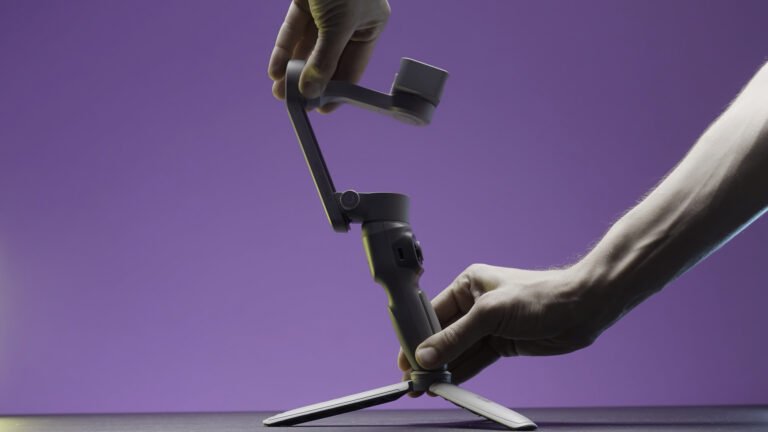
Use a tripod, monopod, gimbal and slider for each type of shot.
Submodule 3.3. Shot planning and coverage
Design a shot list of wide, medium and detail shots of the event.
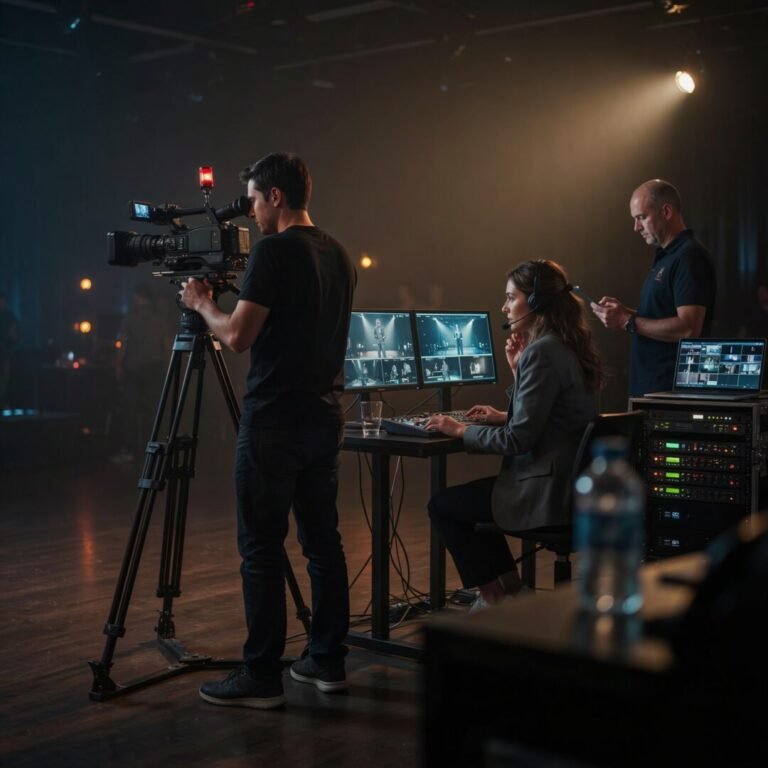
Submodule 3.4. Multi-camera recording
Sync several cameras for concerts and live shows.
Submodule 3.5. Capturing ambient sound
Record audio with shotgun microphones, recorders and desk feeds.
Submodule 3.6. Timecode and synchronization
Use timecode and a clapperboard to make editing easier.
Submodule 3.7. Vertical video for social media
Produce 9:16 pieces designed for immediate sharing.
Submodule 4.1. Reading the stage lighting design
Anticipate lighting changes by consulting the show's technical script.
Submodule 4.2. Portable lighting for interviews
Set up three-point lighting with compact LED panels.
Submodule 4.3. Portraits of artists in the dressing room
Create portraits with available light and lightweight modifiers.
Submodule 4.4. Positions in the pit and the stalls
Choose shooting positions that respect the audience's view.
Submodule 4.5. Photographing dress rehearsals
Use rehearsals to get images without audience restrictions.
Submodule 4.6. Coordinating with stage management and technicians
Communicate with the stage manager and technical crew during the performance.
Submodule 4.7. Safety on stage and around cabling
Move safely among cables, structures and stage machinery.
Submodule 5.1. Concerts and live music
Apply the first three songs rule and capture key moments.
Submodule 5.2. Performing arts: theater and dance
Capture gesture and choreographic movement without breaking the atmosphere.
Submodule 5.3. Exhibitions and openings
Document the work, the exhibition space and attendees with editorial judgment.
Submodule 5.4. Outdoor festivals
Plan movement between and coverage of several simultaneous stages.
Submodule 5.5. Book launches and talks
Record speakers, the audience and details with minimal intrusion.
Submodule 5.6. Heritage and traditional festivals
Document rituals and celebrations while respecting their cultural context.
Submodule 5.7. Coverage for press and media
Deliver a quick selection with captions for agencies and media outlets.
Submodule 6.1. Cataloging and selecting in Lightroom
Import, tag and select images with an efficient workflow.
Submodule 6.2. RAW processing and a consistent style
Create presets to maintain a uniform look.
Submodule 6.3. Selective retouching and noise reduction
Correct high-ISO noise and details with local adjustment tools.
Submodule 6.4. Video editing in Premiere or DaVinci
Cut highlight pieces paced to the event's music.
Submodule 6.5. Color correction and grading
Match cameras and apply LUTs for a professional finish.
Submodule 6.6. Audio mixing and cleanup
Level voices, music and ambience and reduce background noise.
Submodule 6.7. Exporting by platform
Set codecs and sizes for web, social media, press and archive.
Submodule 7.1. Copyright and image rights
Understand intellectual property and the right to one's own image.
Submodule 7.2. Press accreditation and permits
Manage accreditation requests and image usage conditions.
Submodule 7.3. Contracts and usage licenses
Draft contracts covering scope, timelines, licenses and rights assignments.
Submodule 7.4. Data protection at events
Apply personal data regulations when photographing attendees.
Submodule 7.5. Quotes and rates
Calculate the costs of equipment, editing hours and deliverables.
Submodule 7.6. Insurance and liability
Assess coverage for equipment and liability during the event.
Submodule 7.7. Portfolio and client relationships
Build a portfolio and develop lasting relationships with cultural institutions.
Submodule 8.1. Real-time delivery
Send images from the event via wireless transfer.
Submodule 8.2. Online galleries for clients
Publish protected galleries for selection and download.
Submodule 8.3. IPTC metadata and captions
Include authorship, credits and standardized descriptions in the files.
Submodule 8.4. Archiving and backups
Apply the 3-2-1 rule to preserve footage over the long term.
Submodule 8.5. Content distribution metrics
Analyze the reach of pieces published in the media and on social networks.
Submodule 8.6. Planning the capstone project
Define the event, the coverage plan and the final deliverables.
Submodule 8.7. Presenting and defending the project
Present the work, justifying technical and narrative decisions.
Plan and carry out complete photo and video coverage of a cultural event, delivering an edited gallery, a video highlight piece and a usage rights plan.
How you learn
Virtual campus available 24/7 on any device.
Personal follow-up and feedback on your work.
Flexible schedule that fits around your job.
Apply what you learn to a real events case.
Nearby You will get the support of our highly trained teachers, who will expedite your academic development, as well as the guidance of a backup mentor to assist you in achieving your goals.
Practical Our academic virtual space will be your main educational platform, where you will find all the programs you will take. In addition, you will have access to the electronic library, an online society to interact with other trainees and support accessible at all times.
Career paths
• Visual documentation in museums and art galleries
• Production of audiovisual content for festivals
• Entrepreneurship your own cultural photography and video business
Admissions
- Request information
Leave your details and an adviser will contact you.
- Guidance call
We review your profile and career goals.
- Enrolment and access
Secure your place and get access to the campus.
Fees & payment
Indicative instalment. Please confirm payment terms with the admissions team.
At Esinev Education in collaboration with ISEIE Innovation School, we are dedicated to ensuring your future by offering you a wide range of scholarships and financial aid so that you can receive the best education without obstacles. Our scholarships and grants are available to everyone, regardless of your profile, as we have various options to adapt to your personal circumstances. Explore all the information about our scholarships and aid, and choose the one that best suits your needs to ensure your academic training.
Academic excellence The scholarship for Students with an outstanding academic record is awarded to those students who have demonstrated outstanding performance in their studies. This scholarship recognises and rewards the effort, dedication and academic achievements of outstanding students.
Scholarship for people over 45 The scholarship for People over 45 is a unique opportunity designed specifically for people who want to resume their higher studies after having passed a certain stage of their life. This scholarship is aimed at those individuals who, despite not having had the opportunity to obtain a university education at the time, wish to acquire new knowledge and skills to advance their career or explore new professional horizons.
Scholarship for those under 25 The scholarship for young people under 25 is designed to support this specific age group in their pursuit of higher education. This scholarship provides opportunities and financial resources to help young people overcome economic barriers and access quality education. We value the potential and commitment of young people in their academic and professional development, which is why this scholarship is awarded to those who demonstrate outstanding academic performance, as well as strong motivation and dedication to achieve their educational goals. We are committed to supporting talented young people and providing them with the necessary tools so they can make the most of their potential and achieve a successful future.
Woman Leader Scholarship The “Women and Leadership” scholarship is designed to support and empower women who demonstrate strong leadership potential in their fields of study. This scholarship offers the opportunity to receive a quality education and develop leadership skills to help women excel in their careers and challenge gender stereotypes.
Entrepreneurship Scholarships The scholarship is aimed at those people who are working on projects or ventures that seek to generate a positive impact on the world. It is designed to support those individuals committed to making the world a better place through their initiatives.
Large Family The scholarship is specially designed for those students who belong to a large family, recognising and supporting the special circumstances they face in terms of financial resources and family responsibilities.
Self-Employed Scholarship The “Self-Employed Scholarship” is financial aid designed to support entrepreneurs and self-employed workers in their professional development and business growth. This scholarship offers financial support to cover expenses related to the training, advice and resources necessary to strengthen your business skills and competencies.
Job integration scholarship (for unemployed) The job integration scholarship is specifically designed to help unemployed people reintegrate into the labour market. This scholarship provides additional financial support and resources to ease the transition to new employment.
Frequently asked questions
Is this an official degree?
On completion you receive an ESINEV certificate. It is not an official degree; recognition can be assessed depending on the programme you complete and local regulations.
How long is it and how many hours?
Duration: 36 weeks. Study load: 450 hours, designed to fit around your work.
Is it taught online?
Yes. It is 100% online, with a virtual campus, downloadable materials and tutoring from industry professionals.
Can I pay in instalments?
Yes. Payment: 5 months. The admissions team will confirm the terms.
When can I start?
New intakes open every two months. Request information to secure a place in the next one.
Shall we talk about your future in events?
Leave your details and an adviser will walk you through the programme, dates and payment options.
WhatsApp