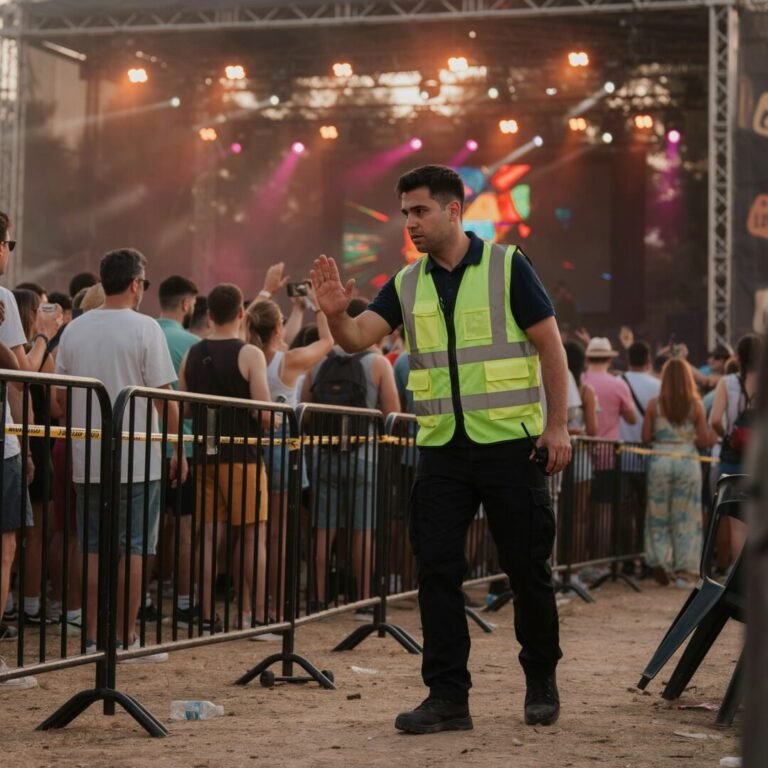
Course in Emergency Action Plans and Coordination with Authorities
The Course in Emergency Action Plans and Coordination with Authorities is a 100% online short course (150 hours, 8 weeks) for anyone who wants to build practical skills in emergency action plans and coordination with authorities. You learn through practical modules and real case studies, guided by tutors with industry experience.
New intake every two months · Interest-free payment plans · ESINEV certificate of completion (non-accredited training).

Overview
The Course in Emergency Action Plans and Coordination with Authorities prepares you to work with confidence on projects related to Emergency Action Plans and Coordination with Authorities. You will learn to:
- Analyse needs, risks and opportunities.
- Design realistic solutions, plans and procedures.
- Coordinate teams, vendors and resources.
- Define KPIs to measure and improve results.
Studying from Australia
This programme is delivered 100% online in English, so you can study from anywhere in Australia — Sydney, Melbourne, Brisbane, Perth, Adelaide or Auckland — and fit your learning around work. The skills covered apply directly to events across Australia, from conferences and exhibitions to weddings and festivals. Fees are shown in Australian dollars (AUD) and can be spread with interest-free instalments.
About your certificate
ESINEV programmes are non-degree professional training delivered 100% online. On completion you receive an ESINEV certificate of completion. ESINEV is a private online training provider: this programme is not an Australian degree or AQF qualification, and is not accredited by TEQSA or ASQA.
Your learning path
Curriculum
A 150-hour program in 5 modules to prepare event emergency and self-protection plans and coordinate their implementation with the competent authorities.
Submodule 1.1. Emergency planning regulations
Learn when an event is required to have an emergency and self-protection plan.
Submodule 1.2. Regional and local public entertainment regulations
Identify local requirements for licenses, capacity and safety.
Submodule 1.3. Responsibilities of the organizer and the venue owner
Define the legal obligations of the promoter, the venue and the plan's author.
Submodule 1.4. Registering and submitting the plan
Submit the plan to the competent body on time and in the correct form.
Submodule 1.5. Relationship with other safety documents
Align the plan with occupational risk assessments and private security plans.
Submodule 2.1. Describing the event and the site
Document the activity, capacity, schedule, access and surroundings of the event.
Submodule 2.2. Identifying internal and external risks
Detect fire, crowding, weather and external threat risks.
Submodule 2.3. Risk assessment and matrices
Assess likelihood and impact to prioritize preventive measures.
Submodule 2.4. Calculating capacity and evacuation routes
Size exits, routes and audience evacuation times.
Submodule 2.5. Crowd dynamics
Prevent crowd surges and crushes by analyzing densities and flows.
Submodule 3.1. Inventory of physical resources
Locate fire extinguishers, fire hose reels, emergency lighting and signage.
Submodule 3.2. Emergency response staffing
Define emergency coordinators and intervention and evacuation teams.
Submodule 3.3. Medical and security provision
Size medical cover, private security and access control.
Submodule 3.4. Emergency plan drawings
Prepare drawings of evacuation routes, resources and assembly points.
Submodule 3.5. Maintenance and inspection of installations
Check temporary installations and build certificates before opening.
Submodule 4.1. Emergency levels and activation
Define minor incidents and partial and general emergencies with clear criteria.
Submodule 4.2. Alarm and evacuation procedures
Establish alert, evacuation and shelter-in-place sequences for the audience.
Submodule 4.3. The event's emergency coordination center
Organize the forward command post with all services.
Submodule 4.4. Communications and messages to the audience
Prepare PA and screen messages for each scenario.
Submodule 4.5. Integration with municipal emergency plans
Connect the event plan with local civil protection plans.
Submodule 5.1. Pre-event coordination meetings
Coordinate with the police, fire service, health services and civil protection before the event.
Submodule 5.2. Safety committee and decision protocol
Define who decides on suspension or evacuation and how.
Submodule 5.3. Training and drills
Train staff and carry out drills or tabletop exercises.
Submodule 5.4. Incident logging during the event
Document incidents and actions for later analysis.
Submodule 5.5. Post-event report and continuous improvement
Review the response and update the plan for future editions.
Write the emergency and self-protection plan for an event, with a risk analysis, resources, an action plan and a protocol for coordination with authorities.
Career paths
This program strengthens your profile for roles related to Emergency Action Plans and Coordination with Authorities: project coordination, operations, consulting and specialised event services at agencies, venues, hotels and corporate event teams.
Admissions
- Request information
Leave your details and an adviser will contact you.
- Guidance call
We review your profile and career goals.
- Enrolment and access
Secure your place and get access to the campus.
Fees & payment
Indicative instalment. Please confirm payment terms with the admissions team.
Frequently asked questions
Is this an official degree?
On completion you receive an ESINEV certificate. It is not an official degree; recognition can be assessed depending on the programme you complete and local regulations.
How long is it and how many hours?
Duration: 8 weeks. Study load: 150 hours, designed to fit around your work.
Is it taught online?
Yes. It is 100% online, with a virtual campus, downloadable materials and tutoring from industry professionals.
Can I pay in instalments?
Yes. Payment: Up to 5 monthly payments. The admissions team will confirm the terms.
When can I start?
Classes start exactly one month after you enrol: if you enrol today, you start on 26 December 2026. Enrolment is open all year and closes every Friday.
Shall we talk about your future in events?
Leave your details and an adviser will walk you through the programme, dates and payment options.
WhatsApp