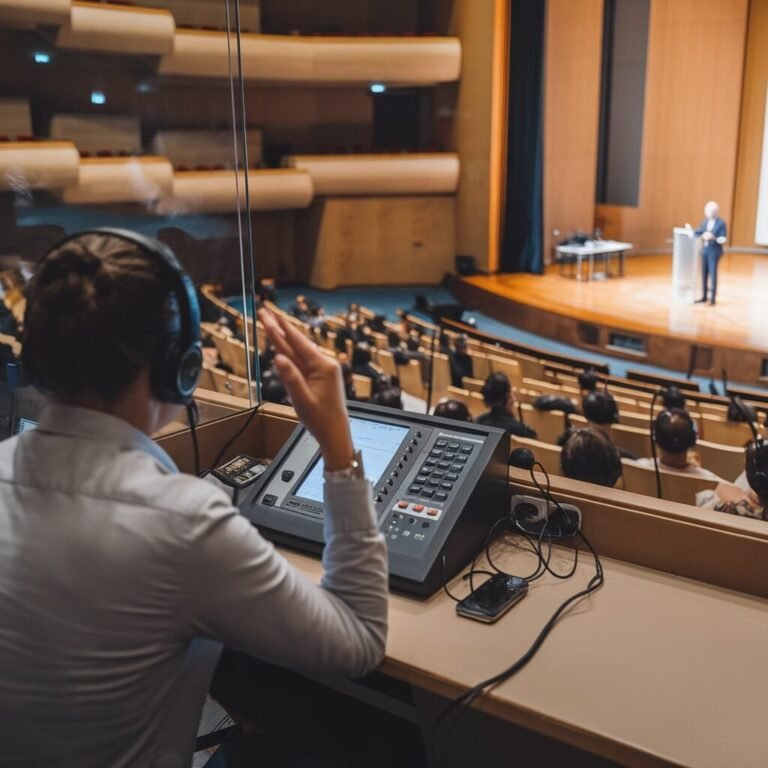
Professional Certificate in Interpretation for Artistic and Cultural Events
The Professional Certificate in Interpretation for Artistic and Cultural Events is a 100% online professional certificate (450 hours, 36 weeks) for anyone who wants to build a career in interpretation for artistic and cultural events. You learn through practical modules and real case studies, guided by tutors with industry experience, and finish with a final project.
New intake every two months · Interest-free payment plans · ESINEV certificate of completion (non-accredited training).

Overview
Our Professional Certificate in Interpretation for Artistic and Cultural Events is a specialised educational programme that will provide you with the necessary skills to interpret in contexts related to arts and culture. This professional certificate focuses on giving you a deep understanding of performance techniques, artistic and cultural terminology, and best practices in this field.
Studying from Australia
This programme is delivered 100% online in English, so you can study from anywhere in Australia — Sydney, Melbourne, Brisbane, Perth, Adelaide or Auckland — and fit your learning around work. The skills covered apply directly to events across Australia, from conferences and exhibitions to weddings and festivals. Fees are shown in Australian dollars (AUD) and can be spread with interest-free instalments.
About your certificate
ESINEV programmes are non-degree professional training delivered 100% online. On completion you receive an ESINEV certificate of completion. ESINEV is a private online training provider: this programme is not an Australian degree or AQF qualification, and is not accredited by TEQSA or ASQA.
Your learning path
Curriculum
A 450-hour program in 8 modules to interpret and provide language mediation at festivals, exhibitions, premieres, artistic tours and international cultural gatherings.
Submodule 1.1. Overview of cultural events
Get to know international festivals, biennials, art fairs and performing arts seasons.
Submodule 1.2. Players in the cultural ecosystem
Identify producers, curators, programmers, artists and agencies.
Submodule 1.3. The cultural interpreter's role
Define the interpreter's role in creative and media contexts.
Submodule 1.4. Ethics and respect for the work
Preserve the artistic intent and the author's voice in your interpreting.
Submodule 1.5. Cultural diversity and public policy
Relate your work to the UNESCO Convention on cultural diversity.
Submodule 1.6. Modes at cultural events
Choose consecutive, simultaneous, liaison or captioning according to format.
Submodule 1.7. Cultural sector vocabulary
Master the terms of cultural production, programming and management.
Submodule 2.1. Visual arts and exhibition design
Handle terminology on techniques, movements and exhibition installation.
Submodule 2.2. Performing arts and dance
Learn the vocabulary of dramaturgy, set design, choreography and lighting.
Submodule 2.3. Music and music production
Interpret terms relating to genres, instrumentation, sound engineering and touring.
Submodule 2.4. Film and audiovisual
Master the language of shooting, editing, festivals and distribution.
Submodule 2.5. Literature and publishing
Convey publishing concepts, styles and literary genres.
Submodule 2.6. Heritage and archaeology
Interpret content on conservation, restoration and intangible heritage.
Submodule 2.7. Cultural event glossaries
Build glossaries from catalogs, press kits and press releases.
Submodule 3.1. Interpreting artist talks
Interpret discussions and post-show talks while keeping the creator's tone.
Submodule 3.2. Presenting works and catalogs
Convey curators' speeches with aesthetic richness and precision.
Submodule 3.3. Poetic and metaphorical language
Apply strategies to interpret imagery, metaphors and wordplay.
Submodule 3.4. Rhythm and stage delivery
Adapt your voice to the rhythm of a cultural event or gala.
Submodule 3.5. Interpreting on guided tours
Accompany exhibition tours with international delegations.
Submodule 3.6. Interpreting awards and galas
Interpret acceptance speeches and live presentations.
Submodule 3.7. Self-assessment of expressiveness
Analyze recordings to improve intonation, register and accuracy.
Submodule 4.1. Translating press kits and catalogs
Translate curatorial texts and biographies to publishing standards.
Submodule 4.2. Theater and opera surtitling
Prepare and cue synchronized surtitles for live performances.
Submodule 4.3. Subtitling films at festivals
Apply subtitling standards and reading speeds for screenings.
Submodule 4.4. Audio description
Learn audio description for blind people in line with applicable standards.
Submodule 4.5. Easy read and cognitive accessibility
Adapt gallery texts into easy read for all audiences.
Submodule 4.6. Translating labels and signage
Write clear, concise multilingual exhibition labels.
Submodule 4.7. Review and quality control
Review cultural translations against stylistic and terminology criteria.
Submodule 5.1. A festival language plan
Define languages and services for each activity on the program.
Submodule 5.2. Supporting touring companies
Manage interpreting at rehearsals, get-ins and dealings with the theater.
Submodule 5.3. Press conferences and red carpets
Interpret quick interviews and statements to the media.
Submodule 5.4. Technical equipment in cultural spaces
Adapt booths and receivers to theaters, museums and heritage sites.
Submodule 5.5. Interpreting at outdoor events
Solve acoustic and mobility problems at outdoor festivals.
Submodule 5.6. Coordination with production and stage management
Synchronize your work with the running order and stage management cues.
Submodule 5.7. Handling the unexpected at cultural events
Respond to program changes, delays and artist no-shows.
Submodule 6.1. Interpreting artist interviews
Facilitate interviews with specialist press while respecting the artist's style.
Submodule 6.2. Engaging international audiences
Design strategies to include audiences who speak other languages.
Submodule 6.3. Multilingual digital communication
Adapt the event's social media and web content into several languages.
Submodule 6.4. Streaming and hybrid events
Integrate interpreting and subtitles into online broadcasts.
Submodule 6.5. Cultural diplomacy
Understand the role of cultural institutes and embassies at events.
Submodule 6.6. Residency and exchange programs
Provide language support to artists on international residencies.
Submodule 6.7. Evaluating the audience experience
Measure the satisfaction and comprehension of multilingual audiences.
Submodule 7.1. Copyright and translation
Learn the rights over translations, surtitles and recordings of works.
Submodule 7.2. Contracts with production companies and festivals
Negotiate terms, credits and cancellation clauses.
Submodule 7.3. Budgeting cultural language services
Calculate the costs of interpreting, surtitling and accessibility.
Submodule 7.4. Data protection and image rights
Apply data protection law and image rights to interviews and recordings.
Submodule 7.5. Funding and grants
Identify translation and cultural mobility grants.
Submodule 7.6. Sustainability at cultural events
Integrate low-impact criteria into language services and materials.
Submodule 7.7. Portfolio and professional brand
Build a portfolio aimed at cultural institutions and production companies.
Submodule 8.1. Choosing the cultural event
Select an international festival or exhibition as a case study.
Submodule 8.2. Map of activities and audiences
Identify language and accessibility needs by activity.
Submodule 8.3. Interpreting and surtitling plan
Assign modes, equipment and interpreters to each session.
Submodule 8.4. Translated materials
Produce samples of labels, press kits and surtitles.
Submodule 8.5. Budget and calendar
Prepare the budget and schedule for the language service.
Submodule 8.6. Live simulation
Interpret an artist talk in front of an assessment panel.
Submodule 8.7. Project defense
Present your comprehensive proposal and answer questions.
Design the language and accessibility service for an international cultural festival, including interpreting, surtitling, budget and an assessed simulation.
How you learn
Virtual campus available 24/7 on any device.
Personal follow-up and feedback on your work.
Flexible schedule that fits around your job.
Apply what you learn to a real events case.
Nearby You will get the support of our highly trained teachers, who will expedite your academic development, as well as the guidance of a backup mentor to assist you in achieving your goals.
Practical Our academic virtual space will be your main educational platform, where you will find all the programs you will take. In addition, you will have access to the electronic library, an online society to interact with other trainees and support accessible at all times.
Career paths
• Theaters and concert halls
• Art galleries and museums
• Cultural events and festivals
br>
• Specialised interpretation agencies
Admissions
- Request information
Leave your details and an adviser will contact you.
- Guidance call
We review your profile and career goals.
- Enrolment and access
Secure your place and get access to the campus.
Fees & payment
Indicative instalment. Please confirm payment terms with the admissions team.
At Esinev Education in collaboration with ISEIE Innovation School, we are dedicated to ensuring your future by offering you a wide range of scholarships and financial aid so that you can receive the best education without obstacles. Our scholarships and grants are available to everyone, regardless of your profile, as we have various options to adapt to your personal circumstances. Explore all the information about our scholarships and aid, and choose the one that best suits your needs to ensure your academic training.
Academic excellence The scholarship for Students with an outstanding academic record is awarded to those students who have demonstrated outstanding performance in their studies. This scholarship recognises and rewards the effort, dedication and academic achievements of outstanding students.
Scholarship for people over 45 The scholarship for People over 45 is a unique opportunity designed specifically for people who want to resume their higher studies after having passed a certain stage of their life. This scholarship is aimed at those individuals who, despite not having had the opportunity to obtain a university education at the time, wish to acquire new knowledge and skills to advance their career or explore new professional horizons.
Scholarship for those under 25 The scholarship for young people under 25 is designed to support this specific age group in their pursuit of higher education. This scholarship provides opportunities and financial resources to help young people overcome economic barriers and access quality education. We value the potential and commitment of young people in their academic and professional development, which is why this scholarship is awarded to those who demonstrate outstanding academic performance, as well as strong motivation and dedication to achieve their educational goals. We are committed to supporting talented young people and providing them with the necessary tools so they can make the most of their potential and achieve a successful future.
Woman Leader Scholarship The “Women and Leadership” scholarship is designed to support and empower women who demonstrate strong leadership potential in their fields of study. This scholarship offers the opportunity to receive a quality education and develop leadership skills to help women excel in their careers and challenge gender stereotypes.
Entrepreneurship Scholarships The scholarship is aimed at those people who are working on projects or ventures that seek to generate a positive impact on the world. It is designed to support those individuals committed to making the world a better place through their initiatives.
Large Family The scholarship is specially designed for those students who belong to a large family, recognising and supporting the special circumstances they face in terms of financial resources and family responsibilities.
Self-Employed Scholarship The “Self-Employed Scholarship” is financial aid designed to support entrepreneurs and self-employed workers in their professional development and business growth. This scholarship offers financial support to cover expenses related to the training, advice and resources necessary to strengthen your business skills and competencies.
Job integration scholarship (for unemployed) The job integration scholarship is specifically designed to help unemployed people reintegrate into the labour market. This scholarship provides additional financial support and resources to ease the transition to new employment.
Frequently asked questions
Is this an official degree?
On completion you receive an ESINEV certificate. It is not an official degree; recognition can be assessed depending on the programme you complete and local regulations.
How long is it and how many hours?
Duration: 36 weeks. Study load: 450 hours, designed to fit around your work.
Is it taught online?
Yes. It is 100% online, with a virtual campus, downloadable materials and tutoring from industry professionals.
Can I pay in instalments?
Yes. Payment: 5 months. The admissions team will confirm the terms.
When can I start?
New intakes open every two months. Request information to secure a place in the next one.
Shall we talk about your future in events?
Leave your details and an adviser will walk you through the programme, dates and payment options.
WhatsApp