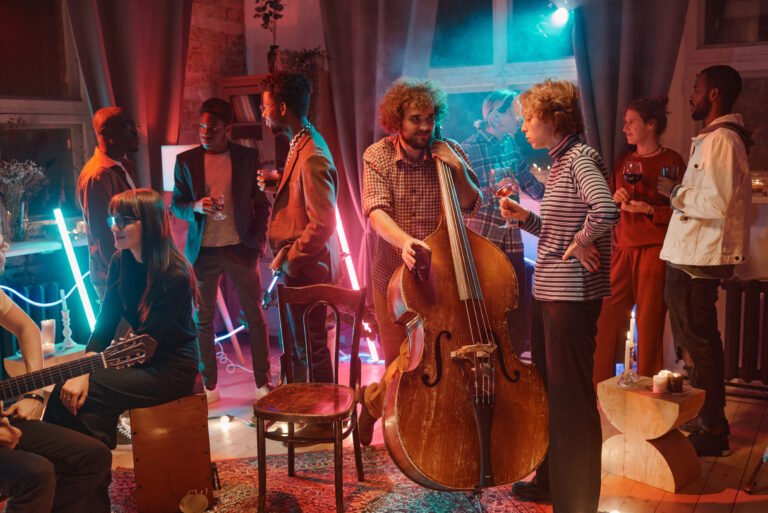
Advanced Professional Certificate in Event Entertainment Production and Management
The Advanced Professional Certificate in Event Entertainment Production and Management is a 100% online advanced professional certificate programme (1,500 hours, 12 months) for anyone who wants to build a career in event entertainment production and management. You learn through practical modules and real case studies, guided by tutors with industry experience, and finish with a capstone project.
New intake every two months · Interest-free payment plans · ESINEV certificate of completion (non-accredited training).

Overview
• Artist and talent management: You will master the coordination and management of artists, bands, actors and other talents involved in entertainment.
• Technical production: You will gain skills in technical production management, including lighting, sound, set design and special effects.
• Security and logistics: You will learn to guarantee the safety of attendees and coordinate the logistics of entertainment elements.
• Impact evaluation: You will develop the ability to measure the impact of entertainment on the event experience and on the objectives of the company or organisation.
• Creativity and adaptability: You will gain skills to innovate and adapt to the changing entertainment demands in the world of events
Our Advanced Professional Certificate in Event Entertainment Production and Management is a advanced professional programme designed to train professionals in the planning, production and management of entertainment elements at events. This advanced professional certificate programme focuses on creativity, logistics, coordination and creating exciting experiences for audiences at a wide range of events, from concerts and festivals to conferences and corporate presentations. Students gain a deep understanding of how entertainment can enrich events and create impact.
Studying from Australia
This programme is delivered 100% online in English, so you can study from anywhere in Australia — Sydney, Melbourne, Brisbane, Perth, Adelaide or Auckland — and fit your learning around work. The skills covered apply directly to events across Australia, from conferences and exhibitions to weddings and festivals. Fees are shown in Australian dollars (AUD) and can be spread with interest-free instalments.
About your certificate
ESINEV programmes are non-degree professional training delivered 100% online. On completion you receive an ESINEV certificate of completion. ESINEV is a private online training provider: this programme is not an Australian degree or AQF qualification, and is not accredited by TEQSA or ASQA.
Your learning path
Curriculum
A 1,500-hour program structured into 10 modules for producing, programming and managing entertainment content at corporate events, festivals and shows.
Submodule 1.1. Mapping the event entertainment sector
Identifies the agents, promoters, agencies, venues and suppliers in live entertainment.
Submodule 1.2. Show formats and how they fit into events
Classifies concerts, shows, entertainment acts, circus and performance art according to event objectives.
Submodule 1.3. Entertainment business models
Analyzes revenue sources such as ticket sales, sponsorship, artist fees, rights and merchandise.
Submodule 1.4. The executive producer and the line producer
Distinguishes the roles, responsibilities and relationship between executive and technical production.
Submodule 1.5. Trends in leisure and experience consumption
Interprets audience data and the new demands of event audiences.
Submodule 1.6. Entertainment at corporate events
Adapts artistic proposals to conventions, galas, launches and incentive trips.
Submodule 1.7. Festivals and music events
Covers the organizational and operational structure of festivals of different sizes.
Submodule 1.8. The digital ecosystem and hybrid entertainment
Assesses streaming, hybrid and immersive formats for remote audiences.
Submodule 1.9. Associations, trade bodies and professional networks
Identifies industry bodies and networking opportunities in live entertainment.
Submodule 1.10. Analysis of benchmark productions
Studies successful productions to identify the keys to programming and management.
Submodule 2.1. Creative brief and client objectives
Turns business and audience objectives into a clear entertainment concept.
Submodule 2.2. Designing the concept and artistic direction
Defines the narrative thread, tone and aesthetics of the event content.
Submodule 2.3. Curating and selecting performers
Selects performers and companies according to audience, budget and fit with the concept.
Submodule 2.4. Building the line-up and bill
Orders the bill by balancing headliners, support acts and emerging talent.
Submodule 2.5. Running order and show pacing
Designs the show sequence by managing energy peaks, transitions and timings.
Submodule 2.6. Stage direction and staging
Coordinates movement, performance and visual elements in the staging.
Submodule 2.7. Presenters, masters of ceremonies and hosts
Selects and prepares hosts who connect the content with the audience.
Submodule 2.8. Bespoke content and customized shows
Creates exclusive acts aligned with a brand, product or corporate message.
Submodule 2.9. Inclusive and diverse entertainment
Programs accessible and representative acts for diverse audiences.
Submodule 2.10. Pitching and presenting the artistic proposal
Presents compelling creative proposals with references, a running order and an estimated budget.
Submodule 3.1. Booking and management agencies
Explains the role of agents, managers and booking agencies.
Submodule 3.2. Offers, fees and booking terms
Drafts firm offers with fees, dates, exclusivity and payment terms.
Submodule 3.3. Performance contracts and key clauses
Reviews cancellation, force majeure, radius clause and image rights clauses.
Submodule 3.4. Technical rider and hospitality rider
Interprets and negotiates performers' technical and hospitality riders.
Submodule 3.5. Performer taxation and withholding
Covers the tax obligations and withholding that apply to domestic and international performers.
Submodule 3.6. International visas and work permits
Manages documentation and deadlines for performers appearing in other countries.
Submodule 3.7. Travel party and performer logistics
Organizes flights, transfers, accommodation and schedules for the artistic team.
Submodule 3.8. Artist relations and on-site care
Manages dressing rooms, accreditation and personalized care for performers during the event.
Submodule 3.9. Managing conflicts with talent
Resolves incidents, last-minute changes and disagreements with representatives.
Submodule 3.10. Evaluation and long-term relationships with performers
Documents experiences and builds lasting professional relationships with talent and agencies.
Submodule 4.1. Technical needs by show type
Defines technical requirements for concerts, theater, dance, circus or entertainment acts.
Submodule 4.2. Stage, backline and equipment
Coordinates the stage, instruments, backline and equipment according to the riders received.
Submodule 4.3. Lighting and sound for shows
Supervises lighting and sound design suited to the format and the venue.
Submodule 4.4. Video, screens and visual effects
Integrates screens, projections and visual effects in service of the content.
Submodule 4.5. Special effects and pyrotechnics
Plans special effects, pyrotechnics and confetti in compliance with permits and safety distances.
Submodule 4.6. Production and load-in schedule
Prepares schedules for load-in, sound checks and rehearsals for each performer.
Submodule 4.7. Changeovers and stage management
Organizes changeovers between acts with stage managers and stage crews.
Submodule 4.8. Coordinating technical suppliers
Manages audiovisual and technical suppliers with defined scopes and schedules.
Submodule 4.9. Dress rehearsal and show sign-off
Leads the dress rehearsal and validates timings, cues and transitions.
Submodule 4.10. Technical direction during the performance
Coordinates live technical execution and resolves issues in real time.
Submodule 5.1. Audience profiling and segmentation
Segments audiences by interests, age and behavior to personalize the experience.
Submodule 5.2. The attendee's customer journey
Designs the attendee journey from purchase to post-event.
Submodule 5.3. Ticketing and access control
Selects sales platforms, ticket types and validation systems at the door.
Submodule 5.4. Dynamic pricing and sales strategy
Defines price tiers, presales and VIP packages to maximize revenue.
Submodule 5.5. Zoning and capacity
Allocates audience, VIP and service areas within authorized capacity limits.
Submodule 5.6. Attendee services and hospitality
Plans food and beverage, cloakrooms, restrooms and information points for the audience.
Submodule 5.7. VIP and premium experiences
Designs premium packages with priority access, meet and greets and exclusive areas.
Submodule 5.8. Audience interaction and participation
Integrates participatory activities, apps and voting during the show.
Submodule 5.9. Accessibility for people with disabilities
Ensures access, viewing platforms, interpreters and services for audiences with specific needs.
Submodule 5.10. Managing complaints and satisfaction
Collects incident reports and surveys to measure satisfaction and improve future editions.
Submodule 6.1. Marketing plan for an entertainment event
Designs the objectives, audiences, messages and promotional channels for the show.
Submodule 6.2. Branding and campaign creative
Develops a visual identity, posters and creative assets consistent with the concept.
Submodule 6.3. Promotion on social media and with creators
Plans social media content and collaborations with creators and influencers.
Submodule 6.4. Digital advertising and targeting
Launches targeted paid campaigns to drive ticket sales.
Submodule 6.5. Press and media relations
Manages press releases, media accreditation and interviews with performers.
Submodule 6.6. Attracting sponsors
Builds sponsorship decks and negotiates sponsorship agreements with brands.
Submodule 6.7. Brand activations at the event
Designs sponsor activations that add real value for attendees.
Submodule 6.8. Audiovisual content and broadcasting
Plans recording, streaming and post-event content to extend the impact.
Submodule 6.9. Email marketing and attendee CRM
Manages attendee databases and communications before and after the event.
Submodule 6.10. Measuring campaigns and return
Analyzes the conversions, reach and return of each promotional channel.
Submodule 7.1. Itemized production budget
Prepares detailed budgets covering artistic, technical, staffing, logistics and marketing costs.
Submodule 7.2. Revenue forecasting and break-even point
Calculates sales scenarios and the show's break-even point.
Submodule 7.3. Cost control and variances
Tracks actual spending against budget and corrects variances in time.
Submodule 7.4. Cash flow and payment schedule
Plans deposits, payments to performers and collections to maintain liquidity.
Submodule 7.5. Negotiating with suppliers and venues
Negotiates rentals, revenue shares and included services with venues and suppliers.
Submodule 7.6. Box office settlement
Carries out transparent box office settlements with performers and promoters.
Submodule 7.7. Taxation of live shows
Applies the sales taxes, withholding and other tax obligations specific to live shows.
Submodule 7.8. Insurance and cancellation cover
Takes out cancellation, public liability and performer non-appearance insurance.
Submodule 7.9. Financial management tools
Uses spreadsheets and management software to control the production.
Submodule 7.10. Final financial report
Prepares the final profitability report with revenue, costs and margins.
Submodule 8.1. Public entertainment regulations
Covers the applicable regulatory framework for public shows and recreational activities.
Submodule 8.2. Licenses and administrative permits
Processes local authority permits, use of public spaces and special authorizations.
Submodule 8.3. Copyright and collecting societies
Manages music licenses and obligations to rights collecting societies.
Submodule 8.4. Image and recording rights
Regulates recordings, broadcasts and the use of performers' and audience members' images.
Submodule 8.5. Audience data protection
Applies data protection regulations such as the GDPR to ticket sales, accreditation and marketing communications.
Submodule 8.6. Emergency and self-protection plan
Coordinates the event's emergency plan and emergency resources.
Submodule 8.7. Private security and crowd control
Organizes security operations and the management of audience flows.
Submodule 8.8. Medical services and prevention
Sizes medical services and healthcare protocols according to capacity.
Submodule 8.9. Occupational health and safety in production
Applies preventive measures for technical and artistic crews during load-in and performance.
Submodule 8.10. Managing crises and cancellations
Prepares communication and action protocols for cancellations or emergencies.
Submodule 9.1. Sustainable show production
Reduces waste, energy consumption and emissions in show production.
Submodule 9.2. ISO 20121 and sustainability certifications
Covers sustainability management systems applicable to events and shows.
Submodule 9.3. Audience mobility and carbon footprint
Designs sustainable transport plans for attendees and crews.
Submodule 9.4. Social impact and community relations
Manages the impact on the surrounding area, neighbors and the local economy.
Submodule 9.5. Attendee data analytics
Analyzes ticketing, access and spending data to inform decisions.
Submodule 9.6. KPIs for event entertainment
Defines indicators for attendance, satisfaction, revenue and media coverage.
Submodule 9.7. Immersive technologies and extended reality
Explores augmented, virtual and mixed reality applied to live shows.
Submodule 9.8. Cashless payments and RFID wristbands
Implements cashless and RFID systems to speed up purchases and access.
Submodule 9.9. Artificial intelligence in production
Applies AI tools to programming, marketing and attendee support.
Submodule 9.10. New formats and hybrid models
Designs hybrid formats that combine in-person and digital audiences.
Submodule 10.1. Leading the production team
Leads production, artistic and technical teams with clear roles and communication.
Submodule 10.2. Organization charts and workflows
Designs organization charts and approval processes for complex productions.
Submodule 10.3. Master project planning
Integrates schedules, milestones and dependencies into a master production plan.
Submodule 10.4. Project risk management
Identifies artistic, technical and financial risks and prepares contingency plans.
Submodule 10.5. Coordination on the event day
Manages the production control center and communication between departments.
Submodule 10.6. Debriefing and post-event evaluation
Leads evaluation sessions and documents lessons learned for future editions.
Submodule 10.7. Business development and client portfolio
Builds commercial proposals and stable relationships with clients and promoters.
Submodule 10.8. Growth strategy for a proprietary event
Plans the consolidation and scaling of a recurring entertainment event.
Submodule 10.9. Executive project presentations
Prepares executive presentations with data, visuals and business arguments.
Submodule 10.10. Developing the integrated entertainment project
Brings together concept, programming, production, finance and marketing in a complete project.
Comprehensive design and planning of a show or entertainment program for an event, with an artistic concept, a line-up, technical production, a budget, a marketing plan, risks and KPIs, defended before an assessment panel.
How you learn
Virtual campus available 24/7 on any device.
Personal follow-up and feedback on your work.
Flexible schedule that fits around your job.
Apply what you learn to a real events case.
Nearby You will get the support of our highly trained teachers, who will expedite your academic development, as well as the guidance of a backup mentor to assist you in achieving your goals.
Practical Our academic virtual space will be your main educational platform, where you will find all the programs you will take. In addition, you will have access to the electronic library, an online society to interact with other trainees and support accessible at all times.
Career paths
• Entertainment coordinators: Some choose to work as coordinators specialising in entertainment production.
• Talent managers: They can also work as talent managers, representing artists and talent at events.
• Technical event directors: Others choose to focus on technical event management, managing technical aspects of entertainment.
• Creative entrepreneurs: Some graduates decide to start their own entertainment production businesses.
Admissions
- Request information
Leave your details and an adviser will contact you.
- Guidance call
We review your profile and career goals.
- Enrolment and access
Secure your place and get access to the campus.
Fees & payment
Indicative instalment. Please confirm payment terms with the admissions team.
At Esinev Education in collaboration with ISEIE Innovation School, we are dedicated to ensuring your future by offering you a wide range of scholarships and financial aid so that you can receive the best education without obstacles. Our scholarships and grants are available to everyone, regardless of your profile, as we have various options to adapt to your personal circumstances. Explore all the information about our scholarships and aid, and choose the one that best suits your needs to ensure your academic training.
Academic excellence The scholarship for Students with an outstanding academic record is awarded to those students who have demonstrated outstanding performance in their studies. This scholarship recognises and rewards the effort, dedication and academic achievements of outstanding students.
Scholarship for people over 45 The scholarship for People over 45 is a unique opportunity designed specifically for people who want to resume their higher studies after having passed a certain stage of their life. This scholarship is aimed at those individuals who, despite not having had the opportunity to obtain a university education at the time, wish to acquire new knowledge and skills to advance their career or explore new professional horizons.
Scholarship for those under 25 The scholarship for young people under 25 is designed to support this specific age group in their pursuit of higher education. This scholarship provides opportunities and financial resources to help young people overcome economic barriers and access quality education. We value the potential and commitment of young people in their academic and professional development, which is why this scholarship is awarded to those who demonstrate outstanding academic performance, as well as strong motivation and dedication to achieve their educational goals. We are committed to supporting talented young people and providing them with the necessary tools so they can make the most of their potential and achieve a successful future.
Woman Leader Scholarship The “Women and Leadership” scholarship is designed to support and empower women who demonstrate strong leadership potential in their fields of study. This scholarship offers the opportunity to receive a quality education and develop leadership skills to help women excel in their careers and challenge gender stereotypes.
Entrepreneurship Scholarships The scholarship is aimed at those people who are working on projects or ventures that seek to generate a positive impact on the world. It is designed to support those individuals committed to making the world a better place through their initiatives.
Large Family The scholarship is specially designed for those students who belong to a large family, recognising and supporting the special circumstances they face in terms of financial resources and family responsibilities.
Self-Employed Scholarship The “Self-Employed Scholarship” is financial aid designed to support entrepreneurs and self-employed workers in their professional development and business growth. This scholarship offers financial support to cover expenses related to the training, advice and resources necessary to strengthen your business skills and competencies.
Job integration scholarship (for unemployed) The job integration scholarship is specifically designed to help unemployed people reintegrate into the labour market. This scholarship provides additional financial support and resources to ease the transition to new employment.
Frequently asked questions
Is this an official degree?
On completion you receive an ESINEV certificate. It is not an official degree; recognition can be assessed depending on the programme you complete and local regulations.
How long is it and how many hours?
Duration: 12 months. Study load: 1,500 hours, designed to fit around your work.
Is it taught online?
Yes. It is 100% online, with a virtual campus, downloadable materials and tutoring from industry professionals.
Can I pay in instalments?
Yes. Payment: 11 months. The admissions team will confirm the terms.
When can I start?
Classes start exactly one month after you enrol: if you enrol today, you start on 20 December 2026. Enrolment is open all year and closes every Friday.
Shall we talk about your future in events?
Leave your details and an adviser will walk you through the programme, dates and payment options.
WhatsApp