Course in Basic First Aid for Events
The Course in Basic First Aid for Events is a 100% online short course (150 hours, 8 weeks) for anyone who wants to build practical skills in basic first aid for events. You learn through practical modules and real case studies, guided by tutors with industry experience.
New intake every two months · Interest-free payment plans · ESINEV certificate of completion (non-accredited training).
Overview
The Course in Basic First Aid for Events prepares you to work with confidence on projects related to Basic First Aid for Events. You will learn to:
- Analyse needs, risks and opportunities.
- Design realistic solutions, plans and procedures.
- Coordinate teams, vendors and resources.
- Define KPIs to measure and improve results.
Studying from Australia
This programme is delivered 100% online in English, so you can study from anywhere in Australia — Sydney, Melbourne, Brisbane, Perth, Adelaide or Auckland — and fit your learning around work. The skills covered apply directly to events across Australia, from conferences and exhibitions to weddings and festivals. Fees are shown in Australian dollars (AUD) and can be spread with interest-free instalments.
About your certificate
ESINEV programmes are non-degree professional training delivered 100% online. On completion you receive an ESINEV certificate of completion. ESINEV is a private online training provider: this programme is not an Australian degree or AQF qualification, and is not accredited by TEQSA or ASQA.
Your learning path
Curriculum
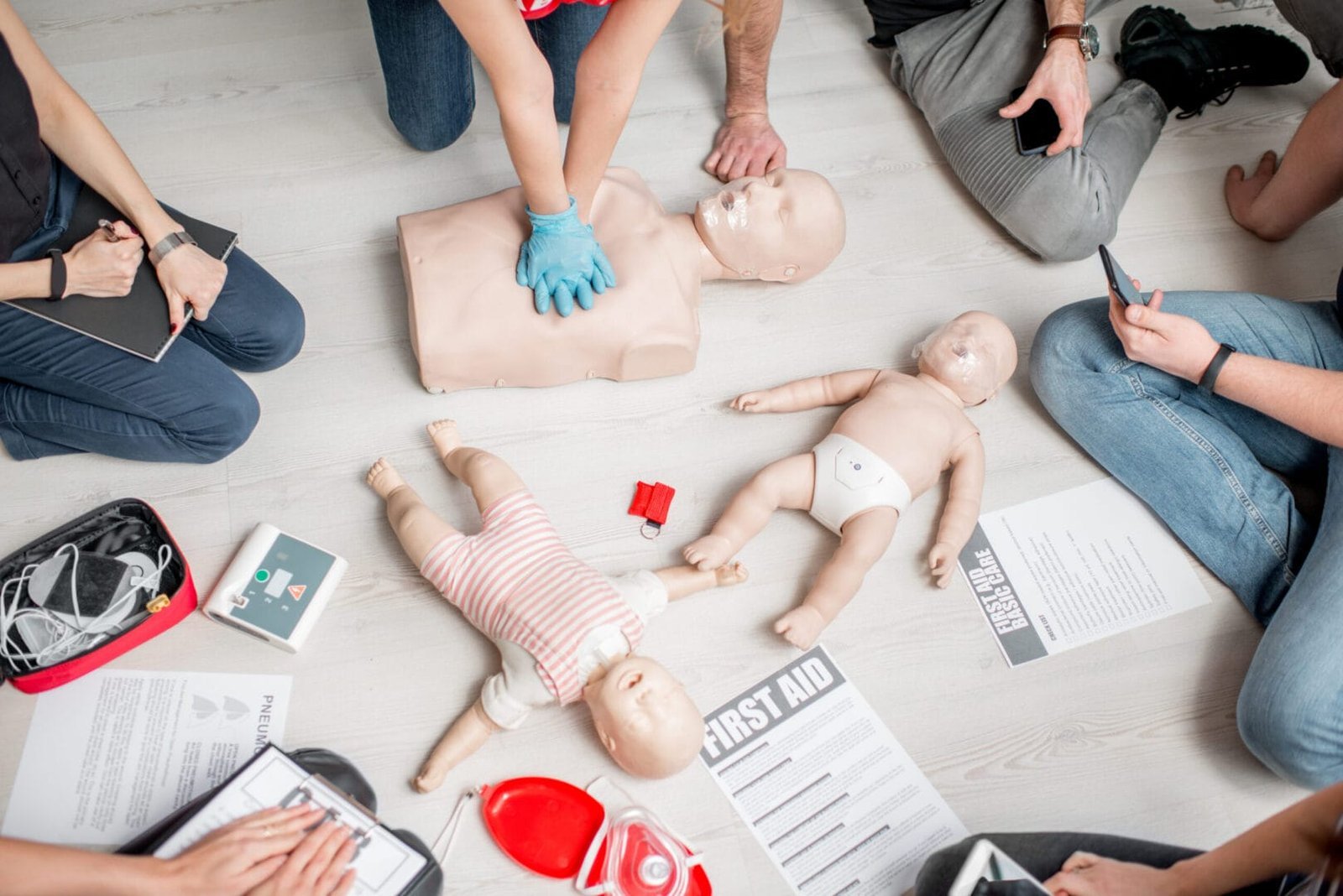
A 150-hour program in 5 modules to respond with sound judgement to the most common medical emergencies at events until the emergency services arrive.
Submodule 1.1. What first aid is
Understand the scope and limits of what a first responder can do.
Submodule 1.2. Protect, alert, assist
Apply the basic sequence in any emergency situation.
Submodule 1.3. Making an effective emergency call
Communicate the location, number of casualties and their condition clearly.
Submodule 1.4. Primary survey of the casualty
Check responsiveness, airway and breathing in an orderly way.
Submodule 1.5. The event first-aid kit
Know the minimum contents and where medical supplies are located.
Submodule 2.1. Adult cardiopulmonary resuscitation
Perform compressions and rescue breaths according to current guidelines.
Submodule 2.2. Using an automated external defibrillator
Use an AED safely by following its prompts.
Submodule 2.3. Choking and abdominal thrusts
Respond to airway obstruction in adults and children.
Submodule 2.4. Recovery position
Place an unconscious casualty who is breathing in a position that protects their airway.
Submodule 2.5. Specific considerations for children and infants
Adapt CPR and choking response to the casualty's age.
Submodule 3.1. Wounds and bleeding
Control bleeding with direct pressure and dress minor wounds.
Submodule 3.2. Burns
Cool and protect thermal and chemical burns correctly.
Submodule 3.3. Sprains, fractures and dislocations
Immobilise injuries with improvised materials until they are assessed.
Submodule 3.4. Head injuries
Recognise warning signs after a blow to the head.
Submodule 3.5. Crush injuries in crowds
Identify compressive asphyxia and prioritise medical evacuation.
Submodule 4.1. Fainting
Care for brief losses of consciousness and prevent recurrence.
Submodule 4.2. Heatstroke and dehydration
Spot the signs and apply cooling and gradual rehydration.
Submodule 4.3. Alcohol and drug intoxication
Respond to excessive consumption by protecting the airway.
Submodule 4.4. Seizures and diabetic emergencies
Protect the casualty during a seizure and assess their blood sugar.
Submodule 4.5. Allergic reactions and anaphylaxis
Recognise anaphylaxis and assist with the use of auto-injectors.
Submodule 5.1. First-aid post
Locate and equip a visible, accessible care point.
Submodule 5.2. Coordination with medical services
Integrate event staff with ambulances and medical teams.
Submodule 5.3. Recording treatments
Document each intervention while respecting patient confidentiality.
Submodule 5.4. Basic psychological support
Offer emotional support to casualties and witnesses.
Submodule 5.5. Protecting the first aider
Use gloves and self-protection measures against infection.
Work through a simulated case involving several emergencies at an event, applying protect-alert-assist, basic life support and the recording and referral protocol.
Career paths
This program strengthens your profile for roles related to Basic First Aid for Events: project coordination, operations, consulting and specialised event services at agencies, venues, hotels and corporate event teams.
Admissions
- Request information
Leave your details and an adviser will contact you.
- Guidance call
We review your profile and career goals.
- Enrolment and access
Secure your place and get access to the campus.
Fees & payment
Indicative instalment. Please confirm payment terms with the admissions team.
Frequently asked questions
Is this an official degree?
On completion you receive an ESINEV certificate. It is not an official degree; recognition can be assessed depending on the programme you complete and local regulations.
How long is it and how many hours?
Duration: 8 weeks. Study load: 150 hours, designed to fit around your work.
Is it taught online?
Yes. It is 100% online, with a virtual campus, downloadable materials and tutoring from industry professionals.
Can I pay in instalments?
Yes. Payment: Up to 5 monthly payments. The admissions team will confirm the terms.
When can I start?
Classes start exactly one month after you enrol: if you enrol today, you start on 26 December 2026. Enrolment is open all year and closes every Friday.
Shall we talk about your future in events?
Leave your details and an adviser will walk you through the programme, dates and payment options.
WhatsApp