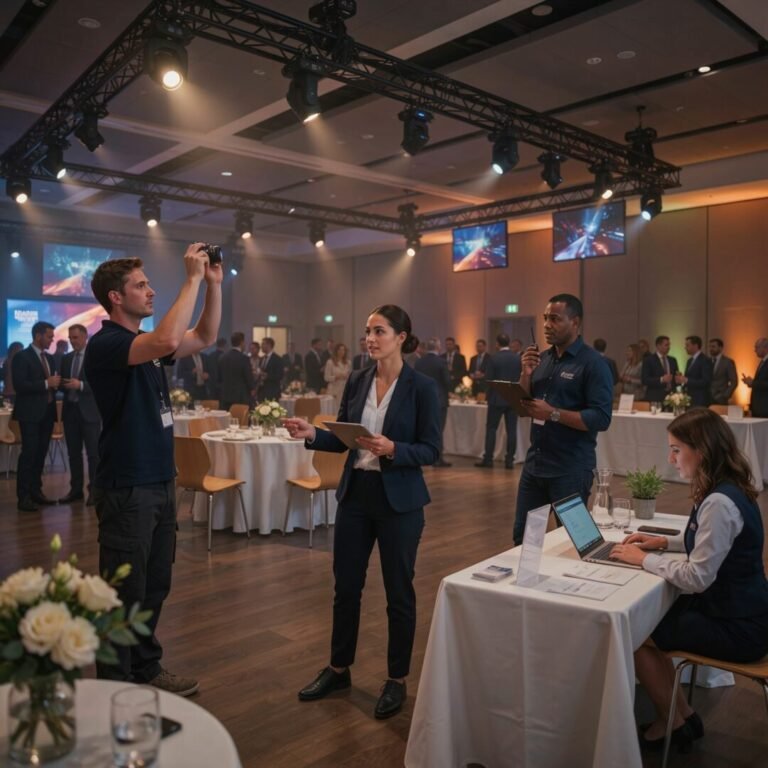
Professional Certificate in Return on Experience (ROE) and Attribution
The Professional Certificate in Return on Experience (ROE) and Attribution is a 100% online professional certificate (450 hours, 36 weeks) for anyone who wants to build a career in return on experience (roe) and attribution. You learn through practical modules and real case studies, guided by tutors with industry experience, and finish with a final project.
New intake every two months · Interest-free payment plans · ESINEV certificate of completion (non-accredited training).

Overview
The Professional Certificate in Return on Experience (ROE) and Attribution prepares you to work with confidence on projects related to Return on Experience (ROE) and Attribution. You will learn to:
- Analyse needs, risks and opportunities.
- Design realistic solutions, plans and procedures.
- Coordinate teams, vendors and resources.
- Define KPIs to measure and improve results.
Studying from Australia
This programme is delivered 100% online in English, so you can study from anywhere in Australia — Sydney, Melbourne, Brisbane, Perth, Adelaide or Auckland — and fit your learning around work. The skills covered apply directly to events across Australia, from conferences and exhibitions to weddings and festivals. Fees are shown in Australian dollars (AUD) and can be spread with interest-free instalments.
About your certificate
ESINEV programmes are non-degree professional training delivered 100% online. On completion you receive an ESINEV certificate of completion. ESINEV is a private online training provider: this programme is not an Australian degree or AQF qualification, and is not accredited by TEQSA or ASQA.
Your learning path
Curriculum
A 450-hour program in 8 modules to measure return on experience (ROE) and attribute business results to events and brand activations.
Submodule 1.1. From ROI to ROE
Distinguish financial return, return on objectives and return on experience.
Submodule 1.2. SMART event objectives
Set measurable objectives aligned with the client's strategy.
Submodule 1.3. The Phillips ROI model
Apply the levels of reaction, learning, behavior, impact and ROI.
Submodule 1.4. Industry measurement frameworks
Learn the measurement methodologies promoted by industry associations.
Submodule 1.5. The experience value chain
Link experience design, behavior and business results.
Submodule 1.6. Stakeholders and their metrics
Define the value each party expects: client, attendee, sponsor and destination.
Submodule 1.7. Measurement plan
Structure a measurement plan before designing the event.
Submodule 2.1. Attendance and participation KPIs
Measure registration, actual attendance, dwell time and session participation.
Submodule 2.2. Net Promoter Score and satisfaction
Apply NPS, CSAT and satisfaction scales with methodological rigor.
Submodule 2.3. App and platform engagement
Analyze interactions, sessions viewed and use of digital features.
Submodule 2.4. Emotional metrics
Explore ways of measuring emotion through surveys, observation and consented biometrics.
Submodule 2.5. Brand recall and perception
Measure brand recall, association and preference after the experience.
Submodule 2.6. Learning and transfer
Assess the knowledge gained and how it is applied afterward.
Submodule 2.7. Sustainability and social impact metrics
Integrate environmental and social indicators into the dashboard.
Submodule 3.1. Survey design
Design pre-, during- and post-event questionnaires with appropriate sampling.
Submodule 3.2. Registration and accreditation data
Use registration data and access scans for analysis.
Submodule 3.3. Lead retrieval and beacons
Capture booth interactions through scanning and proximity sensors.
Submodule 3.4. Social listening
Measure conversation, reach and sentiment on social media.
Submodule 3.5. Focus groups and interviews
Gather in-depth qualitative insight from attendees and clients.
Submodule 3.6. Client CRM data
Cross-reference event data with the CRM to track opportunities.
Submodule 3.7. Consent and data protection
Collect data with a lawful basis, transparency and minimization.
Submodule 4.1. Attribution concepts
Understand how to assign credit to touchpoints in the customer journey.
Submodule 4.2. First-touch and last-touch models
Apply and critique single-touch attribution models.
Submodule 4.3. Multi-touch models
Use linear, U-shaped and time-decay models.
Submodule 4.4. Data-driven attribution
Explore algorithmic models and their data volume requirements.
Submodule 4.5. Influence on pipeline and sales
Measure the opportunities influenced and accelerated by the event.
Submodule 4.6. Control groups and experiments
Design comparisons with control groups to estimate incrementality.
Submodule 4.7. Marketing mix modeling
Understand how marketing mix modeling incorporates events.
Submodule 5.1. Cost structure
Break down the event's direct, indirect and opportunity costs.
Submodule 5.2. Valuing tangible benefits
Quantify the sales, leads, savings and sponsorship generated.
Submodule 5.3. Valuing intangibles
Estimate brand value, relationships and knowledge using justified methods.
Submodule 5.4. Calculating ROI and cost per result
Calculate ROI, cost per lead and cost per opportunity.
Submodule 5.5. Customer lifetime value
Incorporate customer lifetime value into the event's return.
Submodule 5.6. Sensitivity analysis
Assess optimistic, base and pessimistic return scenarios.
Submodule 5.7. Return for sponsors
Calculate the value delivered to sponsors and exhibitors.
Submodule 6.1. Cleaning and unifying data
Integrate diverse sources into a coherent dataset.
Submodule 6.2. Basic statistical analysis
Apply means, distributions, correlations and significance to event data.
Submodule 6.3. Attendee segmentation
Segment audiences to compare behavior and results.
Submodule 6.4. Open-text analysis
Classify open comments with the help of AI tools.
Submodule 6.5. ROE dashboards
Build clear dashboards for clients and management.
Submodule 6.6. Data storytelling
Communicate results with narrative, context and recommendations.
Submodule 6.7. Historical benchmarking
Compare results with previous editions and industry benchmarks.
Submodule 7.1. Results report for the client
Write executive reports with findings and actionable recommendations.
Submodule 7.2. Data governance
Define ownership, access and quality of measurement data.
Submodule 7.3. Bias and limits of measurement
Recognize sampling, response and attribution bias in results.
Submodule 7.4. Measurement in contracts
Include measurement commitments and KPIs in proposals and contracts.
Submodule 7.5. Optimization during the event
Adjust the experience in real time based on data.
Submodule 7.6. Organizational learning
Turn results into improvements for the next event.
Submodule 7.7. Measurement technology tools
Compare event analytics platforms and their integrations.
Submodule 8.1. Defining the case
Select an event and its business objectives.
Submodule 8.2. Designing the measurement plan
Define KPIs, sources, tools and the measurement timeline.
Submodule 8.3. Choosing the attribution model
Justify the attribution model that fits the case.
Submodule 8.4. Data simulation and analysis
Analyze a real or simulated dataset from the event.
Submodule 8.5. Calculating the return
Calculate ROE and ROI with sensitivity analysis.
Submodule 8.6. Dashboard and report
Present the results in a dashboard and an executive report.
Submodule 8.7. Defense before the client
Present conclusions and recommendations to a simulated client.
Design and apply an ROE measurement plan for an event, with an attribution model, return calculation, dashboard and executive report.
Career paths
This program strengthens your profile for roles related to Return on Experience (ROE) and Attribution: project coordination, operations, consulting and specialised event services at agencies, venues, hotels and corporate event teams.
Admissions
- Request information
Leave your details and an adviser will contact you.
- Guidance call
We review your profile and career goals.
- Enrolment and access
Secure your place and get access to the campus.
Fees & payment
Indicative instalment. Please confirm payment terms with the admissions team.
Frequently asked questions
Is this an official degree?
On completion you receive an ESINEV certificate. It is not an official degree; recognition can be assessed depending on the programme you complete and local regulations.
How long is it and how many hours?
Duration: 36 weeks. Study load: 450 hours, designed to fit around your work.
Is it taught online?
Yes. It is 100% online, with a virtual campus, downloadable materials and tutoring from industry professionals.
Can I pay in instalments?
Yes. Payment: Up to 10 monthly payments. The admissions team will confirm the terms.
When can I start?
Classes start exactly one month after you enrol: if you enrol today, you start on 28 December 2026. Enrolment is open all year and closes every Friday.
Shall we talk about your future in events?
Leave your details and an adviser will walk you through the programme, dates and payment options.
WhatsApp