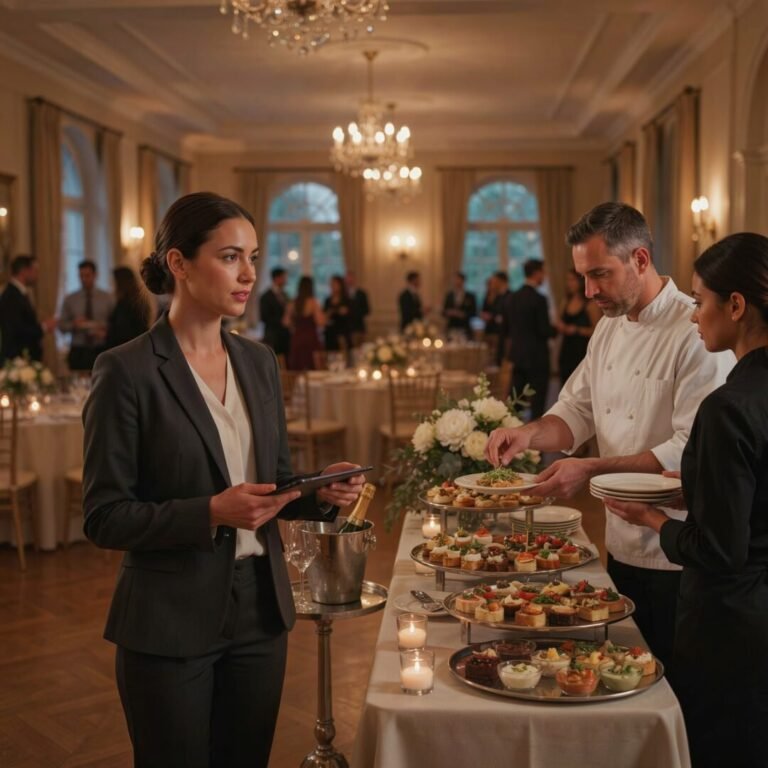
Course in Healthy and Dietary Catering
The Course in Healthy and Dietary Catering is a 100% online short course (150 hours, 8 weeks) for anyone who wants to build practical skills in healthy and dietary catering. You learn through practical modules and real case studies, guided by tutors with industry experience.
New intake every two months · Interest-free payment plans · ESINEV certificate of completion (non-accredited training).

Overview
The Course in Healthy and Dietary Catering prepares you to work with confidence on projects related to Healthy and Dietary Catering. You will learn to:
- Analyse needs, risks and opportunities.
- Design realistic solutions, plans and procedures.
- Coordinate teams, vendors and resources.
- Define KPIs to measure and improve results.
Studying from Australia
This programme is delivered 100% online in English, so you can study from anywhere in Australia — Sydney, Melbourne, Brisbane, Perth, Adelaide or Auckland — and fit your learning around work. The skills covered apply directly to events across Australia, from conferences and exhibitions to weddings and festivals. Fees are shown in Australian dollars (AUD) and can be spread with interest-free instalments.
About your certificate
ESINEV programmes are non-degree professional training delivered 100% online. On completion you receive an ESINEV certificate of completion. ESINEV is a private online training provider: this programme is not an Australian degree or AQF qualification, and is not accredited by TEQSA or ASQA.
Your learning path
Curriculum
A 150-hour program in 5 modules to design and serve healthy, balanced catering offerings tailored to dietary needs.
Submodule 1.1. Principles of healthy eating
Learn about macronutrients, micronutrients and balanced diet recommendations.
Submodule 1.2. Portions and plate balance
Apply the healthy plate model to event menus.
Submodule 1.3. Food groups and substitutions
Substitute ingredients while preserving nutritional value and flavour.
Submodule 1.4. Hydration and healthy drinks
Design offerings of water, herbal teas, juices and drinks with no added sugar.
Submodule 1.5. Food and performance at events
Adjust menus to sustain energy and focus at conferences and all-day sessions.
Submodule 2.1. Food allergies and intolerances
Distinguish allergies from intolerances and understand their risks in service.
Submodule 2.2. Allergens subject to mandatory declaration
Identify regulated allergens and where they may be hidden in dishes.
Submodule 2.3. Gluten-free and lactose-free menus
Prepare safe alternatives while avoiding cross-contamination.
Submodule 2.4. Vegetarian and vegan diets
Design complete, appealing plant-based offerings.
Submodule 2.5. Cultural and religious requirements
Adapt menus to halal, kosher and other dietary restrictions.
Submodule 3.1. Healthy cooking techniques
Apply steaming, baking, griddling and low-temperature cooking.
Submodule 3.2. Reducing salt, sugar and fat
Enhance flavour with spices, herbs and cooking techniques.
Submodule 3.3. Healthy finger food and cocktail receptions
Create balanced, visually appealing bites.
Submodule 3.4. Healthy breakfasts and coffee breaks
Replace pastries with nutritious options for event breaks.
Submodule 3.5. Light desserts
Make sweets with fruit, less sugar and alternative flours.
Submodule 4.1. Preventing cross-contamination
Organise kitchen, utensils and plating for special menus.
Submodule 4.2. Dish identification and labelling
Flag allergens and dietary options at the buffet and in the dining room.
Submodule 4.3. Managing guests with special diets
Record, communicate and serve personalised menus without errors.
Submodule 4.4. Training front-of-house staff
Prepare the team to answer questions about ingredients.
Submodule 4.5. Allergic reaction protocol
Respond correctly to an allergic emergency during the event.
Submodule 5.1. Value proposition of healthy catering
Set your offering apart from the competition with clear arguments.
Submodule 5.2. Costing healthy menus
Calculate recipe costings with organic and specialty ingredients.
Submodule 5.3. Local and organic produce
Select sustainable, seasonal suppliers.
Submodule 5.4. Responsible nutrition communication
Inform guests without making unauthorised health claims.
Submodule 5.5. Food satisfaction surveys
Assess how well menus are received and adjust the offering.
Design of a healthy menu for a corporate event, including dietary adaptations, allergen management and recipe costing.
Career paths
This program strengthens your profile for roles related to Healthy and Dietary Catering: project coordination, operations, consulting and specialised event services at agencies, venues, hotels and corporate event teams.
Admissions
- Request information
Leave your details and an adviser will contact you.
- Guidance call
We review your profile and career goals.
- Enrolment and access
Secure your place and get access to the campus.
Fees & payment
Indicative instalment. Please confirm payment terms with the admissions team.
Frequently asked questions
Is this an official degree?
On completion you receive an ESINEV certificate. It is not an official degree; recognition can be assessed depending on the programme you complete and local regulations.
How long is it and how many hours?
Duration: 8 weeks. Study load: 150 hours, designed to fit around your work.
Is it taught online?
Yes. It is 100% online, with a virtual campus, downloadable materials and tutoring from industry professionals.
Can I pay in instalments?
Yes. Payment: Up to 5 monthly payments. The admissions team will confirm the terms.
When can I start?
Classes start exactly one month after you enrol: if you enrol today, you start on 26 December 2026. Enrolment is open all year and closes every Friday.
Shall we talk about your future in events?
Leave your details and an adviser will walk you through the programme, dates and payment options.
WhatsApp