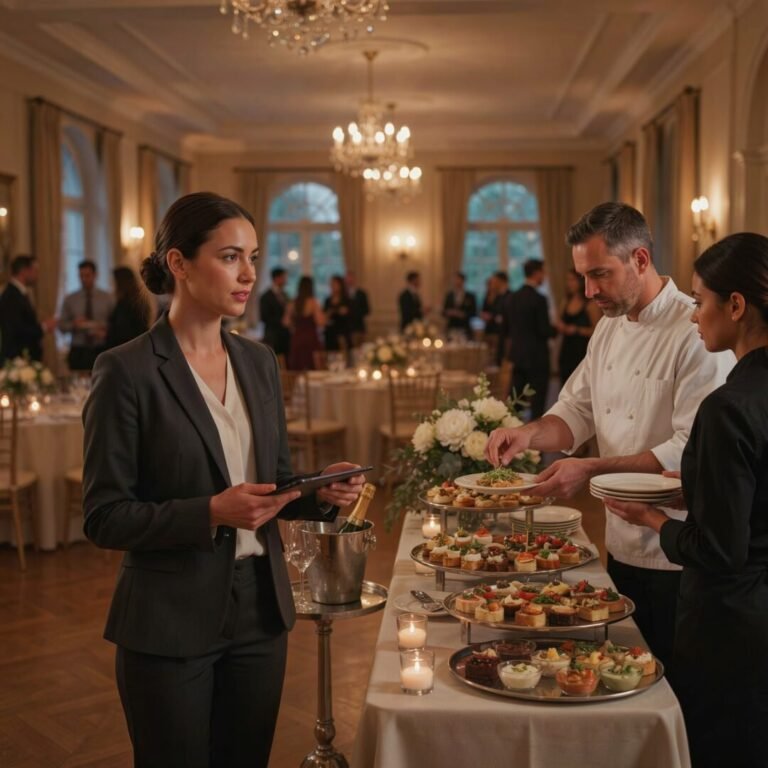
Course in Menu and Food Offering Management
The Course in Menu and Food Offering Management is a 100% online short course (150 hours, 8 weeks) for anyone who wants to build practical skills in menu and food offering management. You learn through practical modules and real case studies, guided by tutors with industry experience.
New intake every two months · Interest-free payment plans · ESINEV certificate of completion (non-accredited training).

Overview
The Course in Menu and Food Offering Management prepares you to work with confidence on projects related to Menu and Food Offering Management. You will learn to:
- Analyse needs, risks and opportunities.
- Design realistic solutions, plans and procedures.
- Coordinate teams, vendors and resources.
- Define KPIs to measure and improve results.
Studying from Australia
This programme is delivered 100% online in English, so you can study from anywhere in Australia — Sydney, Melbourne, Brisbane, Perth, Adelaide or Auckland — and fit your learning around work. The skills covered apply directly to events across Australia, from conferences and exhibitions to weddings and festivals. Fees are shown in Australian dollars (AUD) and can be spread with interest-free instalments.
About your certificate
ESINEV programmes are non-degree professional training delivered 100% online. On completion you receive an ESINEV certificate of completion. ESINEV is a private online training provider: this programme is not an Australian degree or AQF qualification, and is not accredited by TEQSA or ASQA.
Your learning path
Curriculum
A 150-hour program across 5 modules for designing, costing and marketing menus and food offerings for events.
Submodule 1.1. Food in the event experience
Explains the impact of the menu on how the event is perceived.
Submodule 1.2. Types of offering for events
Distinguishes set menus, cocktail receptions, buffets, brunch and themed stations.
Submodule 1.3. Analyzing the client and the event
Adapts the offering to the attendee profile, timing and purpose of the event.
Submodule 1.4. Seasonal and local produce
Selects ingredients according to seasonality and local availability.
Submodule 1.5. Food trends
Incorporates trends such as plant-based cooking, fusion and sustainable gastronomy.
Submodule 2.1. Menu structure and balance
Combines starters, mains and desserts with a balance of flavors and textures.
Submodule 2.2. Menus by event type
Designs proposals for weddings, conferences, galas and corporate events.
Submodule 2.3. Drink pairing
Pairs wines, beers and non-alcoholic drinks with each dish.
Submodule 2.4. Dietary adaptations
Creates vegan, gluten-free and other alternatives for different dietary needs.
Submodule 2.5. Presentation and plating
Defines the look and service format of each dish.
Submodule 3.1. Recipe costing
Calculates the real cost of each dish per portion.
Submodule 3.2. Food cost and margins
Determines the cost percentage and the appropriate selling price.
Submodule 3.3. Pricing strategies
Applies per-person and package pricing and upselling options.
Submodule 3.4. Negotiating with suppliers
Secures better purchasing terms without compromising quality.
Submodule 3.5. Controlling waste
Reduces waste through quantity forecasting and making full use of ingredients.
Submodule 4.1. Event menu proposals
Prepares an attractive food and beverage brochure that is easy to compare.
Submodule 4.2. Tastings and menu trials
Organizes tastings with the client to validate the proposal.
Submodule 4.3. Food writing
Describes dishes in evocative, clear and precise language.
Submodule 4.4. Photography and digital presentation
Showcases the offering with polished images on the website and social media.
Submodule 4.5. Packages and bundled offers
Combines menu, drinks, decoration and services into all-inclusive proposals.
Submodule 5.1. Allergen information
Complies with food information regulations for consumers.
Submodule 5.2. Food safety in the offering
Chooses dishes that are feasible and safe to serve at events.
Submodule 5.3. Sustainable menus
Reduces the environmental footprint with local, plant-based and seasonal produce.
Submodule 5.4. Profitability analysis by menu
Assesses which proposals generate the highest margin and satisfaction.
Submodule 5.5. Regularly updating the offering
Refreshes menus based on results, season and client feedback.
Design of an event menu collection with recipe costing, prices, dietary adaptations and a sales brochure.
Career paths
This program strengthens your profile for roles related to Menu and Food Offering Management: project coordination, operations, consulting and specialised event services at agencies, venues, hotels and corporate event teams.
Admissions
- Request information
Leave your details and an adviser will contact you.
- Guidance call
We review your profile and career goals.
- Enrolment and access
Secure your place and get access to the campus.
Fees & payment
Indicative instalment. Please confirm payment terms with the admissions team.
Frequently asked questions
Is this an official degree?
On completion you receive an ESINEV certificate. It is not an official degree; recognition can be assessed depending on the programme you complete and local regulations.
How long is it and how many hours?
Duration: 8 weeks. Study load: 150 hours, designed to fit around your work.
Is it taught online?
Yes. It is 100% online, with a virtual campus, downloadable materials and tutoring from industry professionals.
Can I pay in instalments?
Yes. Payment: Up to 5 monthly payments. The admissions team will confirm the terms.
When can I start?
Classes start exactly one month after you enrol: if you enrol today, you start on 29 December 2026. Enrolment is open all year and closes every Friday.
Shall we talk about your future in events?
Leave your details and an adviser will walk you through the programme, dates and payment options.
WhatsApp