
Professional Certificate in Alternative-Protein Catering and Low-Carbon Menus
The Professional Certificate in Alternative-Protein Catering and Low-Carbon Menus is a 100% online professional certificate (450 hours, 36 weeks) for anyone who wants to build a career in alternative-protein catering and low-carbon menus. You learn through practical modules and real case studies, guided by tutors with industry experience, and finish with a final project.
New intake every two months · Interest-free payment plans · ESINEV certificate of completion (non-accredited training).
Overview
The Professional Certificate in Alternative-Protein Catering and Low-Carbon Menus prepares you to work with confidence on projects related to Alternative-Protein Catering and Low-Carbon Menus. You will learn to:
- Analyse needs, risks and opportunities.
- Design realistic solutions, plans and procedures.
- Coordinate teams, vendors and resources.
- Define KPIs to measure and improve results.
Studying from Australia
This programme is delivered 100% online in English, so you can study from anywhere in Australia — Sydney, Melbourne, Brisbane, Perth, Adelaide or Auckland — and fit your learning around work. The skills covered apply directly to events across Australia, from conferences and exhibitions to weddings and festivals. Fees are shown in Australian dollars (AUD) and can be spread with interest-free instalments.
About your certificate
ESINEV programmes are non-degree professional training delivered 100% online. On completion you receive an ESINEV certificate of completion. ESINEV is a private online training provider: this programme is not an Australian degree or AQF qualification, and is not accredited by TEQSA or ASQA.
Your learning path
Curriculum
A 450-hour program in 8 modules to design and operate event catering services based on alternative proteins and low-carbon menus.
Submodule 1.1. The climate impact of the food system
Understand the share of global emissions that comes from food production.
Submodule 1.2. Carbon footprint by food type
Compare emissions from meat, dairy, legumes and vegetables per kilo and per portion.
Submodule 1.3. The planetary health diet
Learn the nutritional recommendations that balance human health and planetary boundaries.
Submodule 1.4. Catering as a sustainability lever
Analyze the share of an event's total footprint that comes from food service.
Submodule 1.5. Consumer trends and flexitarianism
Review changes in eating habits and attendee expectations.
Submodule 1.6. Industry frameworks and commitments
Learn about sector emissions reduction initiatives that apply to catering.
Submodule 1.7. Case studies of events with low-carbon menus
Study conferences and festivals that cut their footprint through the menu.
Submodule 2.1. Legumes and traditional plant protein
Make the most of chickpeas, lentils, soy and other legumes in large-scale recipes.
Submodule 2.2. Plant-based meat analogues
Evaluate commercial plant-based products by taste, texture, cost and labeling.
Submodule 2.3. Tofu, tempeh, seitan and fermented foods
Master preparation techniques for traditional Asian and European proteins.
Submodule 2.4. Mycoprotein and fungal protein
Learn about fungi-derived products and their culinary applications at events.
Submodule 2.5. Insect and algae protein
Analyze the regulations, public acceptance and uses of new protein sources.
Submodule 2.6. Cultivated meat and precision fermentation
Review the regulatory and commercial status of next-generation proteins.
Submodule 2.7. Nutritional value and complementarity
Combine plant sources to achieve complete, balanced protein profiles.
Submodule 3.1. Low-carbon menu engineering
Structure menus that cut emissions without sacrificing appeal or profitability.
Submodule 3.2. Techniques for flavor and plant-based umami
Use fermentation, smoking, stocks and reductions to boost flavor.
Submodule 3.3. Event service formats
Adapt offerings to cocktail receptions, buffets, seated banquets, food trucks and coffee breaks.
Submodule 3.4. Seasonal and local cooking
Design menus around the growing calendar and local product availability.
Submodule 3.5. Allergens and special diets
Manage allergens, intolerances and religious requirements in alternative menus.
Submodule 3.6. Recipe costing and technical sheets
Calculate cost per portion and standardize recipes for production at scale.
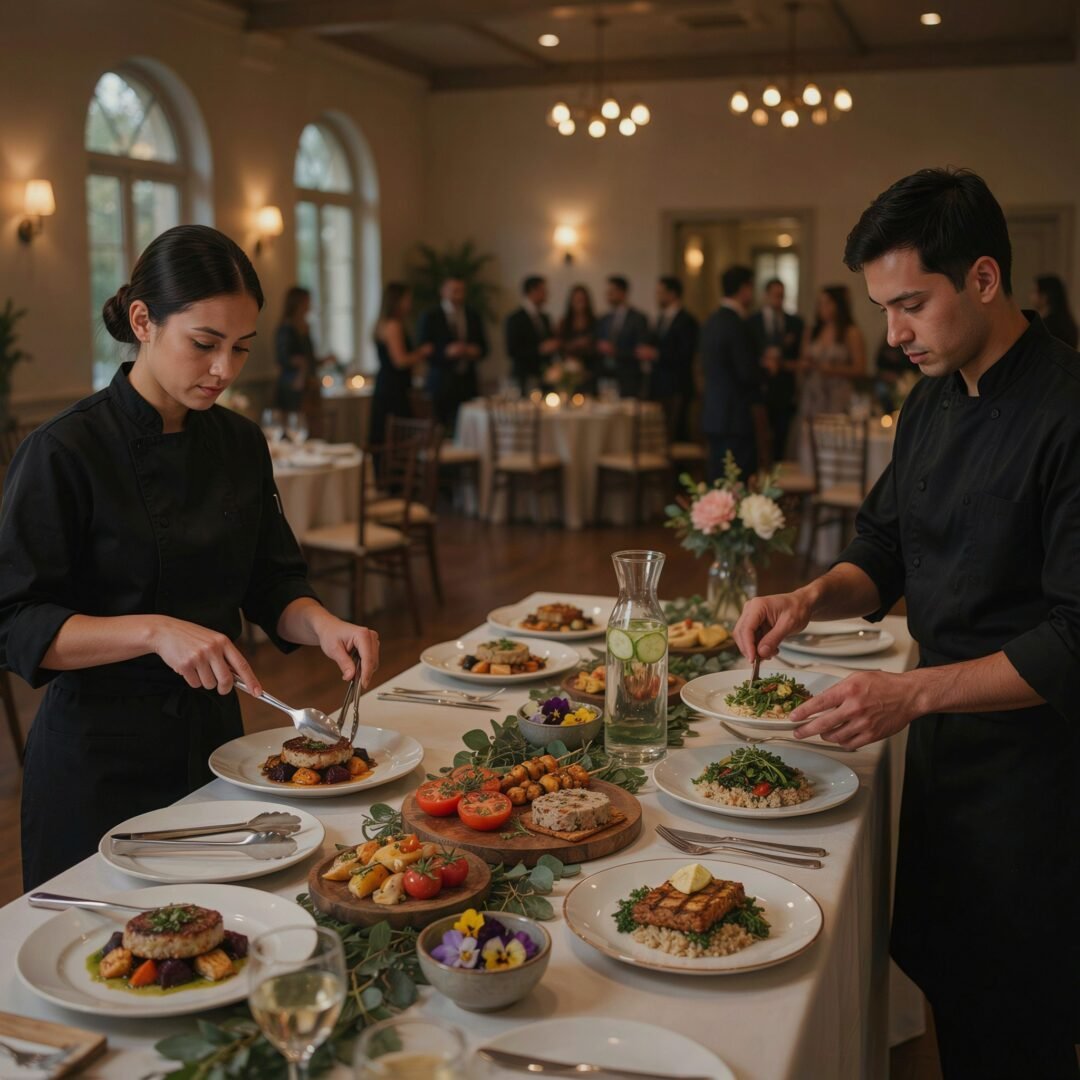
Submodule 3.7. Attractive presentation and plating
Pay attention to the look of dishes to encourage audience acceptance.
Submodule 4.1. Selecting sustainable suppliers
Evaluate suppliers by origin, certifications, farming practices and transport.
Submodule 4.2. Food certifications and labels
Interpret organic, fair trade and animal welfare labels.
Submodule 4.3. Local sourcing and short supply chains
Bring in nearby producers to reduce transport and support the local economy.
Submodule 4.4. Cold chain logistics and storage
Plan storage and transport that ensure safety and freshness.
Submodule 4.5. Forecasting quantities and waste
Calculate portions based on attendee profile to avoid overproduction.
Submodule 4.6. Reusable packaging and tableware
Eliminate single-use plastics with reusable and returnable systems.
Submodule 4.7. Contracts with sustainability clauses
Include verifiable environmental requirements in agreements with food suppliers.
Submodule 5.1. Kitchen production planning
Organize preparation schedules for high-volume service.
Submodule 5.2. Field kitchens and efficient equipment
Choose low-energy equipment and temporary kitchens suited to the venue.
Submodule 5.3. Food safety and HACCP
Apply the hazard analysis and critical control points system.
Submodule 5.4. Service flow and timing
Coordinate the pass, replenishment and timings to avoid queues and waste.
Submodule 5.5. Front-of-house staff training
Prepare the team to explain ingredients, allergens and the benefits of the menu.
Submodule 5.6. Menu signage and communication
Clearly inform guests about the origin, footprint and composition of dishes.
Submodule 5.7. Managing incidents during service
Resolve product shortages, complaints and temperature issues in real time.
Submodule 6.1. Measuring food waste
Quantify kitchen, buffet and plate waste using standardized methodologies.
Submodule 6.2. Food waste prevention strategies
Adjust portions, formats and replenishment to minimize leftovers.
Submodule 6.3. Donating surplus food
Coordinate with food banks and charities in compliance with health regulations.
Submodule 6.4. Composting and waste recovery
Separate organic waste for composting or anaerobic digestion with licensed waste managers.
Submodule 6.5. Waste separation at the event
Design recycling points and signage that make correct recycling easy.
Submodule 6.6. Food waste regulations
Learn the legal obligations for preventing and managing food waste in food service.
Submodule 6.7. Circular economy in the kitchen
Use trimmings and by-products in new dishes and drinks.
Submodule 7.1. Calculating the menu's carbon footprint
Estimate emissions per dish using databases and calculation tools.
Submodule 7.2. Climate labeling of dishes
Communicate the footprint of each option to guide attendee choices.
Submodule 7.3. Communicating without greenwashing
Craft environmental messages that are accurate, verifiable and compliant with regulations.
Submodule 7.4. Nudging and choice architecture
Arrange the offering so the low-carbon option is the most chosen.
Submodule 7.5. Profitability of alternative catering
Analyze margins, ingredient costs and selling prices by format.
Submodule 7.6. Sales proposals for corporate clients
Present sustainable catering as added value in proposals to companies.
Submodule 7.7. Event sustainability reports
Prepare results reports with emissions and food waste indicators.
Submodule 8.1. Event and client brief
Define the event type, number of attendees, service format and objectives.
Submodule 8.2. Designing the complete menu
Propose a menu with alternative proteins adapted to the event format.
Submodule 8.3. Technical sheets and recipe costing
Prepare standardized recipes with costs and allergens for each dish.
Submodule 8.4. Purchasing and supplier plan
Select sustainable suppliers and calculate the quantities needed.
Submodule 8.5. Operations and waste plan
Organize production, service, surplus donation and waste management.
Submodule 8.6. Footprint calculation and comparison
Compare the emissions of the proposed menu against an equivalent conventional menu.
Submodule 8.7. Presentation and defense to the client
Defend the proposal with a budget, reduced footprint and communication plan.
Design the complete catering for an event using alternative proteins, including menu, recipe costing, purchasing, waste management and carbon footprint calculation.
Career paths
This program strengthens your profile for roles related to Alternative-Protein Catering and Low-Carbon Menus: project coordination, operations, consulting and specialised event services at agencies, venues, hotels and corporate event teams.
Admissions
- Request information
Leave your details and an adviser will contact you.
- Guidance call
We review your profile and career goals.
- Enrolment and access
Secure your place and get access to the campus.
Fees & payment
Indicative instalment. Please confirm payment terms with the admissions team.
Frequently asked questions
Is this an official degree?
On completion you receive an ESINEV certificate. It is not an official degree; recognition can be assessed depending on the programme you complete and local regulations.
How long is it and how many hours?
Duration: 36 weeks. Study load: 450 hours, designed to fit around your work.
Is it taught online?
Yes. It is 100% online, with a virtual campus, downloadable materials and tutoring from industry professionals.
Can I pay in instalments?
Yes. Payment: Up to 10 monthly payments. The admissions team will confirm the terms.
When can I start?
Classes start exactly one month after you enrol: if you enrol today, you start on 28 December 2026. Enrolment is open all year and closes every Friday.
Shall we talk about your future in events?
Leave your details and an adviser will walk you through the programme, dates and payment options.
WhatsApp


