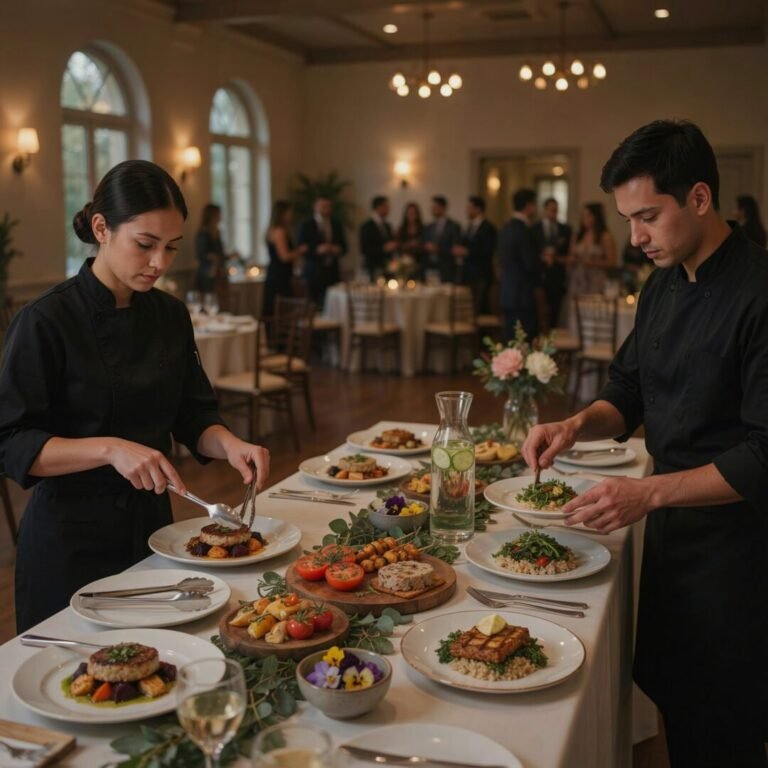
Course in Zero-Waste Banquet Cooking
The Course in Zero-Waste Banquet Cooking is a 100% online short course (150 hours, 8 weeks) for anyone who wants to build practical skills in zero-waste banquet cooking. You learn through practical modules and real case studies, guided by tutors with industry experience.
New intake every two months · Interest-free payment plans · ESINEV certificate of completion (non-accredited training).

Overview
The Course in Zero-Waste Banquet Cooking prepares you to work with confidence on projects related to Zero-Waste Banquet Cooking. You will learn to:
- Analyse needs, risks and opportunities.
- Design realistic solutions, plans and procedures.
- Coordinate teams, vendors and resources.
- Define KPIs to measure and improve results.
Studying from Australia
This programme is delivered 100% online in English, so you can study from anywhere in Australia — Sydney, Melbourne, Brisbane, Perth, Adelaide or Auckland — and fit your learning around work. The skills covered apply directly to events across Australia, from conferences and exhibitions to weddings and festivals. Fees are shown in Australian dollars (AUD) and can be spread with interest-free instalments.
About your certificate
ESINEV programmes are non-degree professional training delivered 100% online. On completion you receive an ESINEV certificate of completion. ESINEV is a private online training provider: this programme is not an Australian degree or AQF qualification, and is not accredited by TEQSA or ASQA.
Your learning path
Curriculum
A 150-hour program in 5 modules to design and deliver banquets with waste-reducing cooking and a zero-waste goal.
Submodule 1.1. The scale of waste at events
Quantify where and how much food is lost at a typical banquet.
Submodule 1.2. The food waste hierarchy
Prioritize prevention, redistribution, reuse and composting over disposal.
Submodule 1.3. Legal framework on food waste
Learn the current legal obligations on preventing waste and donating surplus.
Submodule 1.4. Assessing the catering operation
Audit purchasing, production and service to identify loss points.
Submodule 1.5. Zero-waste goals and commitments
Set measurable reduction targets agreed with the client and supplier.
Submodule 2.1. Accurate guest forecasting
Adjust production using confirmations, historical data and no-show rates.
Submodule 2.2. Designing a whole-ingredient menu
Create dishes that use the entire product, including its less valued parts.
Submodule 2.3. Seasonal and local produce
Select local ingredients that reduce losses from transport and storage.
Submodule 2.4. Precise purchasing and technical sheets
Calculate exact quantities from recipe costings and yields.
Submodule 2.5. Service formats that reduce leftovers
Choose plated service, controlled buffets or stations based on expected waste.
Submodule 3.1. Root-to-leaf cooking
Use vegetable stems, peels and leaves in banquet preparations.
Submodule 3.2. Whole-animal and whole-fish use
Use trimmings, bones and fish frames in stocks, fillings and sauces.
Submodule 3.3. Fermentation and preserving
Extend the shelf life of surplus through fermenting, pickling and preserving.
Submodule 3.4. Waste-reducing baking and pastry
Turn day-old bread and ripe fruit into desserts and bites.
Submodule 3.5. Food safety when reusing ingredients
Apply HACCP, traceability and temperature control to all reuse.
Submodule 4.1. Donating surplus to charities
Organize agreements, logistics and hygiene conditions for food donation.
Submodule 4.2. Waste separation in kitchen and dining areas
Set up separation points for organic waste, packaging and glass.
Submodule 4.3. Composting and organic waste recovery
Coordinate with waste managers to turn organic waste into compost.
Submodule 4.4. Eliminating single-use plastics
Replace disposables with reusable tableware and returnable systems.
Submodule 4.5. Communicating with guests and staff
Explain the zero-waste approach to secure buy-in and good practice.
Submodule 5.1. Weighing and logging waste
Measure waste by stage and type using log sheets or sensors.
Submodule 5.2. Zero-waste indicators
Calculate kilos per guest, donation rate and landfill diversion.
Submodule 5.3. The economic impact of waste reduction
Quantify savings in purchasing and waste management for the client.
Submodule 5.4. The menu's carbon footprint
Estimate the menu's emissions and compare lower-impact alternatives.
Submodule 5.5. Designing a zero-waste banquet
Integrate menu, purchasing, operations and measurement into a complete case.
Design a zero-waste banquet for 300 guests with a waste-reducing menu, purchasing plan, surplus management and results indicators.
Career paths
This program strengthens your profile for roles related to Zero-Waste Banquet Cooking: project coordination, operations, consulting and specialised event services at agencies, venues, hotels and corporate event teams.
Admissions
- Request information
Leave your details and an adviser will contact you.
- Guidance call
We review your profile and career goals.
- Enrolment and access
Secure your place and get access to the campus.
Fees & payment
Indicative instalment. Please confirm payment terms with the admissions team.
Frequently asked questions
Is this an official degree?
On completion you receive an ESINEV certificate. It is not an official degree; recognition can be assessed depending on the programme you complete and local regulations.
How long is it and how many hours?
Duration: 8 weeks. Study load: 150 hours, designed to fit around your work.
Is it taught online?
Yes. It is 100% online, with a virtual campus, downloadable materials and tutoring from industry professionals.
Can I pay in instalments?
Yes. Payment: Up to 5 monthly payments. The admissions team will confirm the terms.
When can I start?
Classes start exactly one month after you enrol: if you enrol today, you start on 28 December 2026. Enrolment is open all year and closes every Friday.
Shall we talk about your future in events?
Leave your details and an adviser will walk you through the programme, dates and payment options.
WhatsApp